Many of life’s choices become easier when we have developed an understanding of who we are and what we stand for. At all ages, it is important to pause and reflect on these central questions. Before deciding what we want to do in a situation, it is important to ask who we want to be. Reflection on who we want to be connects us to deeply held values and often guides us to respond or plan in ways that give energy and peace. When our actions align with deeply held values, we can act with integrity and feel at peace with our decisions. We grow through and move on through the choices we make.
God also invites us to ask the question, “Whose we are?” Where we see ourselves as a loved part of God’s family, our values grow from a love of people and the planet. We see ourselves as uniquely gifted by God with the capacity to make a difference for others through using our gifts. We also see our need for forgiveness. God gives us the opportunity to renew by owning our mistakes and the ways we have hurt people, and by seeking his forgiveness. We are invited to leave our mistakes at the foot of the cross, learn through them and move on free to do our best with God’s help and guidance.
Principal’s Log
Middle and Senior College students were invited to reflect on who they are and who they are becoming at assembly this week. Having a core value of kindness and being inclusive creates a safe place where we can each grow to be the best we can be. By being kind, inclusive, committed to learning and doing our best, and celebrating as others do the same, we create a rich space for people to grow. Parents are invited to engage in these conversations at home around values as learning moments occur. Together as a school and home we can support young people in their reflections and strengthen growth.
Director of Learning, Ms Sue Arahill provides some very important insights into Pacific’s approach to learning and ways in which teachers, students and parents can work together to improve learning. This year, we extend our pedagogical approach that develops the dispositions and capabilities embedded in the Four Pillars to include explicit teaching and student reflection on 5 Learner Attributes. The 5 Learner Attributes of collaboration, agile thinking, active impact, intellectual character and self-efficacy provide a shared language that enables students to reflect on themselves and improve their capabilities as learners from Prep-Year 12 and beyond. We look forward to strengthening this capability rich practice.
Head of Learning Middle College, Mrs Jo Belchamber provides advice for students and parents about resource management critical for growth as self-regulated learners. Resource management includes habits of effectively organising and saving digital resources and creating productive physical spaces. It also includes time management and purposeful help seeking. Reinforcement of these practices at home through simple questions helps build capability.
Routines within the classroom and at home also reduce cognitive load and enable young people to engage more effectively with learning. The article by our Counselling team provides useful tips on ways in which parents can establish routines at home to assist young people across Prep- Year 12. Week 4 is a good time for us all to reflect on the routines we have established and to adjust to enhance growth.
Parent partnerships are central to learning and growth at Pacific. We were delighted to have a strong contingent of new and continuing parents join together at our Friends of Pacific AGM and first general meeting for 2026. We thank our outgoing committee members and our incoming members for their willingness to support our community. We look forward to a strong year of connection through the leadership of the Executive Team very capably led by Co-Chairs, Mrs Jan Watman and Mrs Jane Hill.
Staying connected is an important element of parent partnership and we encourage all families to use the Pacific Lutheran College App. Directions for downloading the App are later in the newsletter. The Parent Handbook for 2026 has now been published on Nav and in the App within the policies section. We would encourage families to familiarise themselves with the material within the Handbook that includes details about the practices, policies and procedures of the College.
May God encourage and equip us to grow as people with firmly held values who use our gifts to make a difference.
Dr Bronwyn Dolling, Principal
From the College Chaplain
Integrity That Celebrates Others
I have been really enjoying watching the Winter Olympics recently. There is something deeply inspiring about sportsmanship and camaraderie between competitors. After years of intense training, sacrifice, and determination, everything comes down to a single performance. But it is the moment after the event, as the score is posted, that I have found the most powerful.
It is the moment that the athletes congratulate and celebrate each other’s achievements that I have found the most heartwarming. Perhaps even more moving is watching the runners-up sincerely celebrate with the winners. In a moment where disappointment could easily take over, many choose respect, choose humility and choose integrity.
This response doesn’t just happen accidentally.
In 1 Peter 3:8–14, we are encouraged:
“Finally, all of you, be like-minded, be sympathetic, love one another, be compassionate and humble. Do not repay evil with evil or insult with insult. On the contrary, repay evil with blessing… Turn from evil and do good; seek peace and pursue it.”
Integrity is revealed not when we win, but when we don’t.
It is very easy to become jealous or upset when someone else receives what we were hoping for — a job, a grade, a promotion, even a friendship we have longed for. It is human nature to feel bitterness creeping in when things don’t go our way. Our first response may be to withdraw, criticize, compare, or quietly resent.
But scripture calls us to something higher.
Integrity means choosing to celebrate others even when our own hearts feel disappointed. It means blessing when it would be easier to complain. It means pursuing peace instead of feeding comparison.
The Olympic athletes who congratulate their competitors demonstrate something powerful: their identity is not solely tied to the medal. They value character above outcome. In the same way, our identity is not rooted in whether we “win” in life’s competitions. It is rooted in Christ.
Peter reminds us that when we pursue righteousness — when we choose compassion, humility, and unity — we are blessed. That blessing may not look like a gold medal, but it looks like peace in our hearts and integrity in our character.
Integrity is not proven on the podium.
It is proven in the quiet decision to rejoice with those who rejoice.
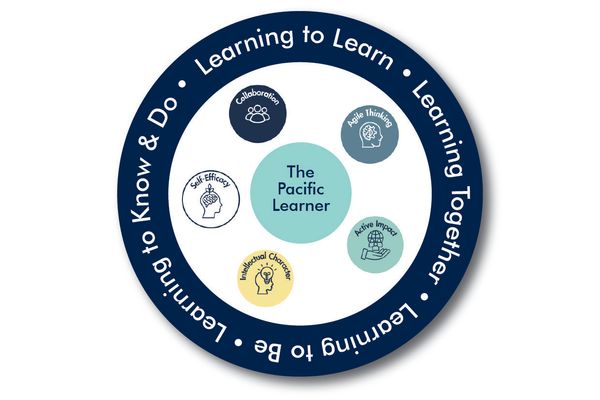
To intentionally plan for and explicitly teach these skills, we have developed five Learner Attributes. These attributes provide a shared language for learning, enabling students to reflect on themselves as learners and build their capacity in each attribute.
Pacific Learner Attributes
Learners have a shared sense of responsibility as co-creators and utilise their communication skills to explore and negotiate new meanings. They consider group dynamics, and diverse perspectives and motivations, while contributing actively.
Learners are inquisitive, reflective, and adaptable. They think critically and generate ideas and solutions as circumstances or problems emerge or change.
Learners actively strive to make ethical and socially-just choices that positively impact society and the environment. They see themselves as stewards of God’s creation, care for others, seek reconciliation and equality, and consider the social, cultural and environmental impacts of their decisions.
Learners actively pursue understanding and the development of meaning. They seek and value feedback and see learning as a cyclic and meta-cognitive process. They persevere when challenged and have the courage to question and explore ideas.
Learners are solution-focused and have belief in their capacity and capability to make a difference to themselves and others. They show grit and accept vulnerability and failure are integral to growth and learning.
The Learner Attributes empower students not only to experience success in the classroom today, but to confidently step into the opportunities and challenges of tomorrow. Through the intentional development of these attributes, students gain the language and tools to deeply understand themselves as learners, strengthening their sense of agency and capacity to shape their own learning journey.
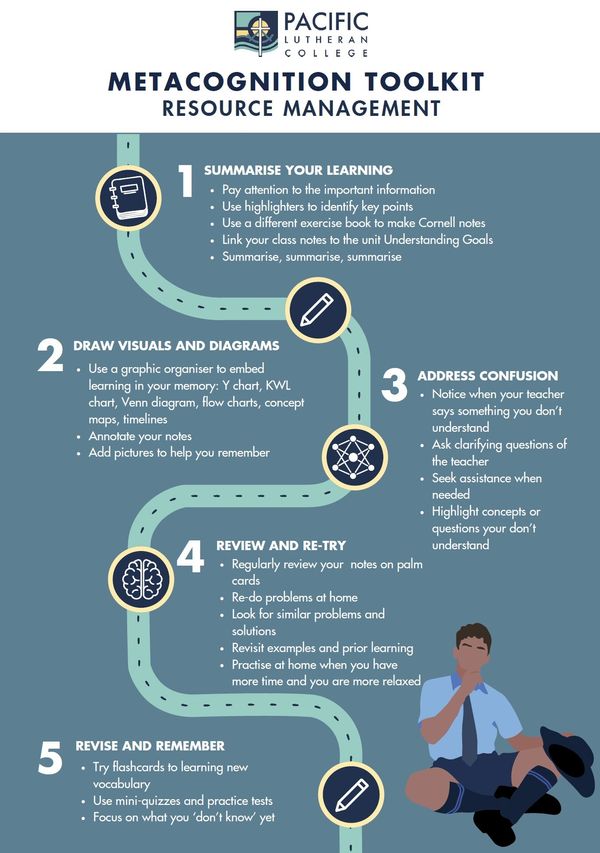
Resource Management: Setting Up for Successful Learning
Resource management involves noticing what is available to achieve optimal learning and making intentional decisions about how to use those resources well. Sometimes this means restructuring one’s environment; at other times it means managing time more carefully or seeking support when needed.
This term, Year 7 students have been explicitly taught resource management strategies, including how to effectively organise their digital environment. Ideally, all Middle College students will use clearly named folders to organise and store their knowledge. “Losing” learning activities and home learning, a common challenge for students new to digital platforms, can be avoided by practising simple routines: naming documents as they are created, saving them in the correct folder before beginning work, and regularly saving throughout the task. These small habits reduce cognitive load and allow students to focus their energy on thinking rather than searching.
Resource management also extends to the physical environment. Middle College students often need guidance in structuring their workspace, and this can be reinforced at home. Self-regulated learners recognise the importance of a suitable learning environment. They move away from peers or technology that may distract from immediate learning and choose spaces that support focus and productivity. A well-structured environment helps learners concentrate more deeply and more readily notice their progress.
Time management is another essential aspect of resource management. Self-regulated learners think carefully about how to divide their time and effort between activities. They prioritise concepts they find more challenging rather than simply completing what feels easiest. They pace themselves, allocate appropriate time to revision and practice, and recognise when a task requires sustained focus. Through effective time management, students create the conditions for meaningful progress rather than rushed completion.
Finally, effective resource management includes purposeful help seeking. When progress is difficult, self-regulated learners are aware of it. They consult available resources such as materials on Nav, textbooks and worked examples, or class notes, before becoming overwhelmed. They collaborate with peers, ask clarifying questions, or approach their teacher when confusion persists. Help seeking is not a sign of weakness; it is a strategic choice made by learners who are committed to growth.
Families can strengthen resource management by prompting Middle College students to plan their time, structure their environment, and seek support strategically. Simple questions like “What’s your plan?” and modelling of organised, thoughtful study habits can powerfully reinforce students’ independence.
Resource Management is the second phase of The PLC Metacognition Toolkit, found on pages 29–33 of the Student Handbook and on the Learning and Assessment tile on Nav.
Mrs Jo Belchamber, Head of Learning Middle College
From the Director of Student Engagement
Beyond the Classroom: Finding Connection and Belonging at Pacific
As we reach Week 4 of the term, there is a natural shift in the rhythm of College life. The early weeks of settling into new classes, teachers and routines are behind us, and now is the ideal time for students in Year 6–12 to look outward and lean into the rich opportunities that make our Pacific community vibrant and life-giving.
At Pacific, learning extends far beyond the classroom. Our sporting teams, music ensembles, rock bands and choirs, Pacific Action Groups, and Future Problem-Solving teams and various clubs provide students with opportunities to form connections, develop character, skills and strengths, collaborate with others, lead and grow. Lunchtime clubs led by our Library staff create welcoming spaces for curiosity and creativity, while Safe Harbour, capably supported by Year 12 Pacific Action Group Wellbeing Captains continues to offer a place of connection, conversation and support for students seeking belonging and encouragement.
Belonging does not happen by accident. It is built when students show up, commit, practise, perform, compete, contribute and serve alongside others. When students are engaged in the life of the College, they begin to see themselves not just as individuals attending school, but as valued members of a community. Research consistently affirms what we see daily in our context: when young people feel a strong sense of belonging, they engage more positively in their learning. That engagement, in turn, has a powerful impact on wellbeing and academic outcomes.
For parents, Week 4 is also a timely moment to ask a simple but important question: “What are you getting involved in?” These conversations at the dinner table matter. Encouraging your child to step into a team, audition for an ensemble, join a club or participate in a Pacific Action Group may be the gentle nudge they need to find their place. Encourage your child to check the ‘Student NAV’ landing page for daily notices on the many opportunities on offer, days and times and meeting places.
I have the privilege this term of coaching the Senior B Year 12 Volleyball Girls’ team. Standing on the sideline, I see far more than drills and scoreboards. I get to witness their joy. I hear their encouragement of each other. I see students who are learning to trust one another, to persevere, to celebrate effort and to represent something bigger than themselves. Their sense of purpose and belonging to one another, to their team and to the College in that moment on the volleyball court and as they leave the game on a high cannot be bottled. The memories they are creating in these moments will extend well beyond their final year.
Their experience is just one example of what happens when students connect deeply with what is on offer here at Pacific. Their confidence grows and friendships strengthen. In essence, school becomes not just a place of learning, but a place of meaning. Belonging at Pacific does not happen by accident. It is intentionally cultivated by the dedication of our staff who coach teams after hours, rehearse ensembles, lead clubs, mentor action groups and create safe spaces for students to gather and grow. When students step into these opportunities, they are stepping into environments shaped by staff who deeply care about their development not only as learners, but as young people of character and purpose.
My encouragement for every student at Pacific is to find at least one space where they can belong beyond the classroom. And I encourage every family to keep the conversation going. When students are known, connected and involved, the impact is significant, not just for their time here at Pacific, but for their life beyond.
Ms Leigh Finter, Director of Student Engagement
From the Acting Head of Staff and Student Engagement P-5
Prep- Year 5 News
As with all schools, Pacific Lutheran College has its own culture; formed by people, experiences and an inspiring 25-year history. As we begin to celebrate these 25 years together, the Foundation and Junior College are using weekly assemblies to reflect on the wider Australian culture. Guided by Mrs Sue Zweck, this learning will focus on the Australian Flag and our National Anthem. This provides an opportunity to understand where our College sits within Australian culture, and a way to think about how our values of Dignity, Care and Respect are shared nationally. I want to highlight our Year 5 student leaders who are responsible for raising and lowering the flag each day. They have been carrying out this role with respect and pride, which has been especially noticed by our staff in the administration office. This is a great example of servant leadership in action.
I would like to thank all families for your cooperation with the Stop, Drop and Go area. It is flowing much better now, and your patience was appreciated as we set and reinforced clear expectations.
With students from Year 3-5 now in the BYOD system for devices, we ask that families are being vigilant with their use at home. A small number of online issues have been followed up in recent weeks, and regular conversations at home help guide children to make wise and respectful choices.
The eSafety Commissioner recommends 3 key strategies for families helping children navigate the online world safely;
Be engaged, open and supportive- start these conversations even with your children under 5 years old.
Set some rules- develop these together as a family, understanding that they will need to be revised as your child’s developmental and academic needs change.
Use safety features and settings- the eSafety commissioner has useful resources to guide parents here.
It has been amazing to see how well our new students (including the Preps) have settled into College life. Our teachers and teacher aides are working together to instill confidence and growth within each and every student, and this is a real joy to witness! Thank you for being a special part of our Pacific community.
Mrs Ali Wedding, Acting Head of Staff and Student Engagement P-5
From the Head of Career Development
Careers News
As students begin to consider life beyond school, we are reminded that career pathways are not simply about employment they are about vocation, service, and the kind of person we are becoming. In this edition of Careers, students are invited to reflect on how their gifts and values can shape meaningful futures.
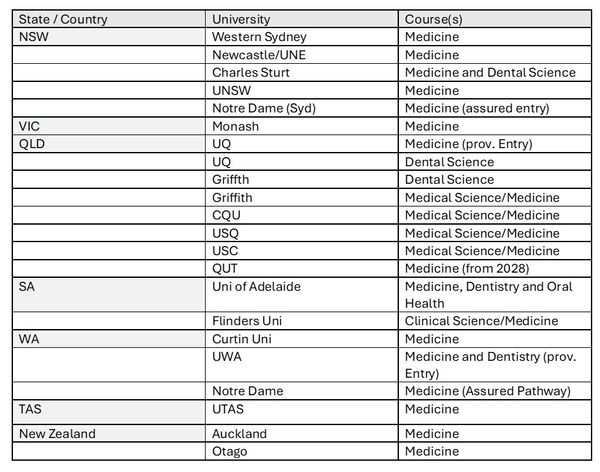
Opportunities such as Defence work experience encourages leadership, courage, teamwork, and commitment to serving others. Pathways into medicine and health sciences, including preparation for the UCAT, call for resilience, compassion, and a desire to care for those in need. As you explore the opportunities outlined below, consider not only what you want to do, but who you want to be.
Defence provides work experience placements
Secondary and tertiary students who are interested in a career in the Australian Defence Force (ADF) or the Australian Public Service (APS). The program is nationally coordinated with placements offered at various Defence establishments throughout Australia.
UCAT 2026 - Common questions about UCAT answered by MedEntry
What is UCAT?
UCAT stands for University Clinical Aptitude Test. To enter most medical and dental schools in Australia, you will need to succeed in the UCAT. The UCAT is a two hour computer based test consisting of multiple-choice questions and is divided into four separately timed subtests: Verbal Reasoning, Decision Making, Quantitative Reasoning and Situational Judgement.
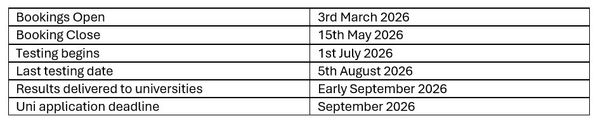
What are the key dates for UCAT 2026?
The cost for a UCAT test taken in Australia is $335.
How can I register to sit UCAT?
You are required to complete a two-step process using the Pearson VUE online registration system to register and then book a test. Further details are available at www.ucat.edu.au You can sit UCAT in your final year of high school and any year thereafter.
Do I need to prepare for UCAT?
Yes! The UCAT is a skills-based test which is completely different to any other test you have sat at school. It is a very difficult, time pressured exam and quality preparation is therefore essential. Even students who obtain a perfect ATAR can miss out on a place in medicine due to poor UCAT scores. For some universities, UCAT is as important or more important than your ATAR. UCAT preparation will also help with your school study as it enhances your thinking and test-taking skills.
What UCAT score do I need to get into medicine?
The UCAT score that you need to get into medical or dental school depends on the university to which you are applying. In general, for non-rural students, a UCAT percentile of at least 90 will usually secure you a medical interview offer. This may not seem high, but remember you are competing against a much tougher cohort than at school or university.
How to book a Careers Appointment
Senior College students are encouraged to take ownership of their career development by accessing the Careers Bookings Calendar to manage their own appointments. Students may invite parents/carers to attend meetings either in person or via Zoom. When booking during class time, students are asked to check with their teacher as a courtesy before missing all or part of a lesson. Book appointments via the link: Pacific Lutheran Careers Support or the QR code.
Mrs Veronica Sanmarco, Head of Career Development
Food for Thought
The Power of Routine: Why School-Day Structure Matters
By Week 4 of Term 1, the initial “back-to-school” momentum has usually settled. Fatigue can begin to creep in, assessment schedules start to build, and motivation may fluctuate. This is the point in the term where consistent school-day routines become especially important for children and young people from Prep through to Year 12.
Routines provide more than just organisation — they create psychological safety. When students know what to expect each morning and afternoon, their brains can focus less on uncertainty and more on learning. Predictable routines reduce stress by lowering the cognitive load associated with decision-making (“What am I doing next?” “What have I forgotten?”). Instead, energy can be directed toward engagement, problem-solving and social connection.
For some students, inconsistent routines can increase anxiety and avoidance behaviours. When mornings feel chaotic or unpredictable, school can start to feel overwhelming. Over time, this can contribute to reluctance to attend or increased school refusal behaviours, particularly for students already prone to worry or emotional sensitivity. A calm, structured start and finish to the day helps signal to children and adolescents that school is a normal, manageable and expected part of life.
Importantly, routines also build independence and resilience. When students repeatedly practise the same morning and afternoon habits, those behaviours become automatic. This reduces last-minute stress (for both children and parents) and fosters a sense of competence: “I know what to do. I’ve done this before.”
Across a Prep to Year 12 setting, routines will look different depending on age — but the principles remain the same: predictability, preparation and consistency.
Top 5 Must-Do Routine Habits for School Days
Consistent Wake-Up and Bedtimes. Aim for the same wake-up and sleep times each school day. Adequate sleep underpins attention, emotional regulation and behaviour.
Prepare the Night Before. Pack school bags, charge devices, lay out uniforms and check the next day’s schedule in the afternoon or evening. Mornings should be for execution, not decision-making.
Calm, Device-Light Mornings. Limit screens before school where possible. A calm breakfast and predictable sequence (dress, eat, brush teeth, bag check) sets a steady tone.
Positive Departure Ritual. A consistent goodbye routine — whether that’s a hug, a phrase (“Have a great learning day!”), or a check-in question — reinforces emotional security and confidence.
Structured After-School Reset. Have a predictable after-school pattern: snack, short downtime, homework/study block, then extracurricular or family time. This reduces procrastination and evening stress.
By Week 4, it’s not too late to reset. If routines have drifted, small adjustments now can make a significant difference for the remainder of term. Consistency does not mean rigidity — flexibility is important — but predictable patterns create stability. And when students feel stable, they are far more likely to attend, engage and thrive.
“We are what we repeatedly do. Excellence, then, is not an act, but a habit.”— Will Durant
Mr Brendan Macaulay, Head of Student Counselling and Mrs Amanda Kratzmann, College Counsellor
College News
Dance and Drama: A Vibrant New Era at Pacific
At Pacific Lutheran College, Drama and Dance are flourishing from Prep to Year 5, with Dance newly introduced into the Junior College program this year. Far more than “fun extras,” the Creative Arts play a vital role in whole-child development, enriching academic growth, strengthening social skills, nurturing emotional wellbeing and building confidence and creativity.
With all auditions now complete, we are thrilled by the extraordinary interest in the Pacific Dance Academy and Pacific Dance Academy Junior. Almost 50 students, spanning Junior and Senior College, are now part of our growing Dance Academy, a fantastic turnout that reflects the enthusiasm and commitment of our community. Students will rehearse at least three times per week, preparing for an exciting year of competitions and performance opportunities, as outlined in the information booklet.
We are also delighted to introduce Miss Nina Abbott and Mrs Patricia Ray, whose passion, expertise and energy are leading this exciting new chapter of Dance at Pacific. Together, they are fostering a dynamic, supportive and high-quality dance culture that will see students shine both in rehearsal and on stage.
Miss Nina Abbott, Dance and Drama teacher
Nina Abbott completed her Bachelor of Dance, Drama and Physical Education at Central Queensland University and has since dedicated her career to teaching and mentoring young performers.
She brings extensive experience working with both dance studio teams and school-based performance and eisteddfod groups. During her time at Grace Lutheran College and Caloundra State School, Nina choreographed musicals and competitive dance teams, preparing students for local eisteddfods and major school performance events. Alongside her school programs, she has also worked within private dance studios, training and mentoring students for competitions, concerts and community performances. Her approach extends beyond technical excellence, focusing strongly on developing teamwork, stage presence, discipline and confidence in every performer.
Now serving as Dance and Drama teacher at Pacific, Miss Nina Abbott is passionate about building a dynamic and high-quality performance program that provides meaningful opportunities for students to shine both on stage and within the wider community. She is thrilled to be joining the Pacific community and looks forward to fostering a vibrant and inspiring Dance and Drama culture across both curriculum and performance pathways in the year ahead.
Mrs Patricia Ray, Dance and Drama teacher
With a Bachelor of Performing Arts specialising in Ballet and Contemporary Dance, Mrs Patricia Ray has trained internationally at prestigious institutions, including the Rambert School and the ArtEZ School of the Arts. Her training encompassed classical ballet, pas de deux, Graham and Cunningham techniques, and contemporary practices such as floorwork and release. While in the Netherlands, she performed in a special presentation honouring Hans van Manen for Princess Margriet, and she also undertook advanced classical ballet training and performance experience in Romania before relocating to Australia.
Mrs Patricia Ray has taught extensively across studio settings and taught within the school system, delivering curriculum from Year 7–12, choreographing for competition teams, musicals and community events, and creating original works and stimulus material for Senior dance assessments. In studio environments, she has delivered RAD and ATOD syllabuses, prepared students for examinations and competitions and taught extension Ballet, Contemporary, Jazz, Lyrical and Acrobatic Arts.
Her teaching practice focuses on developing strong technique, expressive artistry and confidence in every dancer. Additionally, as Founder and former Artistic Director of Neo Vida Dance Company, she created thought-provoking choreography exploring social and political themes, aligning creative practice with educational purpose. Mrs Patricia Ray is passionate about fostering a supportive, inclusive and high-quality dance environment and looks forward to inspiring students both in the classroom and on stage.
Library News
Kids’ Lit Quiz
Keen readers in Year 5-8 are invited to sign up for Kids’ Lit Quiz. Teams of four students compete against other teams in a trivia competition. There are ten rounds of ten questions each and lots of prizes on offer. You can see some of the previous questions here to get a feel for what the competition is like. The competition will take place in the library on Wednesday 25th March from 9am until 11:30am. Interested students need to put their name down with the library staff.
Drawing Competition
To celebrate the release of Blue: Dragon of the Sea, author Aleesah Darlison is giving away three signed copies of her book. The competition is open to students aged 5 to 12 years. To enter, draw your version of the blue glaucus nudibranch.
Eager readers in Year 5 and 6 are invited to nominate for a Readers’ Cup team. Readers’ Cup involves reading five books (listed below) and then answering questions on them as a team of four. Winners of the Sunshine Coast heat go on to the State Final. If you are interested, or would like to know more, see the library staff.
Book List
Childish by Morris Gleitzman (contemporary)
Soaring with the Sugarbird lady by Dianne Wolfer (Historical)
Spirit of the Crocodile by Aaron Fa’Aoso and Michelle Scott Tucker (First Nations/Adventure)
Inked by Karen Wasson and Jake Minton (Graphic Novel/Fantasy)
Down the Plot Hole by Annaleise Byrd (Fantasy)
QBD Maroochydore will be offering a popup shop on the day if you wish to purchase books.
Event Details
Venue – Worship Centre, Immanuel Lutheran College, 126-142 Wises Road Buderim
Make sense of what’s happening now: What social media use looks like for kids under the restrictions, and what parents are seeing at home.
Manage access without constant battles: How to respond to pressure and pushback without turning it into daily conflict.
Keeping safety in focus: How to notice when something online isn’t right and keep conversations open.
If you can't make this session live, you can access the recording and any relevant supporting resources as they send this to all registrants after the session.
Understand the pressures kids face today: Why school, friendships, and social life can feel so intense for kids now.
Spot the early signs of belonging and identity struggles: How disconnection and self-doubt can show up as anxiety, withdrawal, or resistance to attending school.
Build confidence and resilience over time: Practical ways to help kids cope, adapt, and feel more capable as they grow.
If you can't make this session live, you can access the recording and any relevant supporting resources as they send this to all registrants after the session.
Did you know: That approximately 190,000 to 300,000 cats and dogs enter shelters and pounds across Australia annually?
How you can help: Take care of your pets, ensuring to keep them out of shelters, or if you’re looking to adopt a pet, get them from a rescue or shelter.
Enrichment of the week
Use paper cups and add treats in each one, stack them up and let your pet knock them down to get to the treat.
Tayla, Alani, Louise and Ayla - Pacific Plus Year 8
Apply for a Pacific Lutheran College Scholarship
At Pacific, scholarships power possibility, where curious minds connect and ideas take flight.
Applications are now open for 2027 Academic, General Excellence, Music and Sport Scholarships for Year 6 to Year 11 students.
Visit our website to learn more and apply today. Applications close Friday 6th March 2026.
Stay Connected with the Pacific Lutheran College App
This is a reminder to all families that the Pacific Lutheran College App is the College’s primary communication channel for short-term updates and important notices. We strongly encourage every parent to download the App to ensure you receive timely information. Download for iOS | Download for Android
The PLC App brings together all parent services in one convenient location. It combines Parent Lounge for administrative tasks, including activity consent, updating medical details and viewing reports, with Navigator (NAV) features such as personalised assessment calendars, feedback, news and notifications.
Importantly, the App now provides access to the most up-to-date College policies as well as the 2026 Parent Handbook, making it easier than ever for parents to review key information. The 2026 Parent Handbook is within the policies section of the App.
App notifications are delivered faster than email or SMS, particularly when customised to suit your preferences.
We encourage parents to personalise their notification settings by selecting the events they wish to receive updates for and choosing how those notifications are delivered (e.g. push notifications or digest summaries). This ensures you receive the information most relevant to your family in the way that best suits you.
To log in, please use your PLC parent account username and password (sent to you at enrolment: name.number@parent.pacluth.qld.edu.au). If you are unsure of your username, please contact the IT Department at ithelp@pacluth.qld.edu.au or phone 07 5436 7300 to be put through for assistance.
The PLC App is an exciting and efficient way to stay informed and connected with the College. If you have not yet downloaded it, we encourage you to do so as soon as possible.
Ms Samantha Barrass, Community Liaison and Communications Officer
Thank you to all our Pacific students and families who supported our Shrove Tuesday Pancake Fundraiser on Tuesday morning. The event was a wonderful success, and it was heartwarming to see our Pacific community come together in support of Australian Lutheran World Service.
A special thank you to our Spirituality and Service Action Group volunteers and our dedicated staff, whose enthusiasm and organisation ensured the morning ran so smoothly. Your commitment and teamwork truly made the event possible.
We look forward to sharing more fundraising initiatives with you as the year unfolds. As always, we deeply appreciate your generosity, spirit, and ongoing support.
Spirituality and Service Action Group
Prep Vision Screening 2026
The State Government is offering a free Prep-aged Vision Screening program to all primary schools in Queensland under the Primary School Nurse Health Readiness Program. This will involve Registered Nurses screening the vision of children in their first year of formal schooling.
A Registered Nurse will be visiting Pacific Lutheran College during Week 6 – Thursday 5th March 2026 to conduct vision screening for children in Prep classes. (Please note this date is different to the College calendar dates).
If you wish to have your Prep child participate in this free Vision Screening program, please complete the online consent via the link: https://visionscreening.health.qld.gov.au/ParentalConsent/24110Epq or the QR code by Sunday 22nd February 2026. Alternatively, there will be paper consent forms that you can collect from the Health Centre at the College, which will need to be returned no later than Friday 20 February. Parents do not need to be present for screening, however if you would like to be, please contact the College to arrange this. Your child does not need a Medicare card to participate in screening.
If your child’s vision is screened, you will be advised of the results in writing. If a vision concern is found, you will receive a phone call from the nurse to discuss referral to an eye health professional for further assessment.
Participation in vision screening is NOT compulsory. If you do NOTwish for your child to participate in screening, please complete the consent form and indicate that you wish to decline screening.
If you have any questions, please contact the Primary School Nurse Health Readiness Program on 1800 687 372.
Mrs Julie Clucas and Ms Nic Parnell, College Nurses
Friends of Pacific
Connecting College and Community
Thank you to all the families who joined us at our Annual General Meeting that was followed by our February General Meeting – it was wonderful to see so many new faces.
Please congratulate our new Executive Committee:
Co-Chairpersons – Jan Watman and Jane Hill
Vice Chairperson – To be advised
Secretary – Allyson Sarvari
Treasurer – Jenny Bowe
Event Co-Ordinator – Louise Walker
Foundation Executive – Vacant – seeking nominations
Junior Executive – Zara Buston
Middle College Executive – Bianca Warland
Senior College Executive – Vacant – seeking nominations
Alumni Executive – Vacant – seeking nominations
We are looking forward to an amazing 25 Years of Pacific in 2026 including our Trivia Night in August.
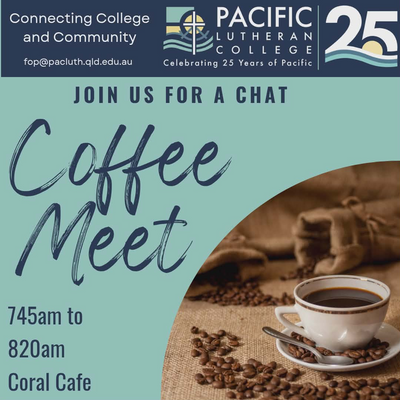
The Executive Committee is holding a planning meeting for the upcoming year. The meeting will be held at our next Coffee & Chat outside Coral Café on Friday 20th February from 7:45am. All members are welcome so if you have any ideas/suggestions to enhance the activities or fun ideas please come along and put your ideas to us.
If you cannot make the meeting, please send your suggestions to FoP@pacluth.qld.edu.au and we will put them forward for you. It is always good to hear new ideas from fresh faces so please come along. You can purchase coffee at Coral Café until 8:20am
Ms Jan Watman & Mrs Jane Hill, Co-Chairpersons
Sports News
Sports News
Pacific Paddle Excellence Program
The Pacific Paddle Excellence Program will commence Monday, March 2nd in Week 6. Students who would like to participate need to sign up through clipboard (Year 7-12) or send an email to Mrs Lisa Muir (Year 4-6) lmuir@pacluth.qld.edu.au. Parents can also contact Mr Gary Graves ggraves@pacluth.qld.edu.au for more information. After students have expressed their interest, a more detailed letter will be sent home to parents. Due to the program's success, we may need to hold trials.
Training Times
Year 8-12 students train on Monday from 3:30 – 5:00 pm
Year 4-7 students train on Thursday from 3:30 – 5:00 pm
There is a possibility of some movement between groups depending on available equipment and paddling ability, particularly in the Year 7 age group. Once the program is up and running, we will also offer training on Wednesday morning at 7am.
Students need to be transported by their parents to and from the training venue at Lake Kawana. Last year, Pacific won the state championships for both the Marathon and Sprint events. This was achieved through representing the College in both the singles and doubles boat in both beginner (TK1) and advanced (K1) craft. Due to the program's success and growth, we have purchased new boats and paddles.
Mr Gary Graves, TIC PLC Kayaking
Competitive Sport News:
SCISSA Junior and Intermediate Soccer
While our Intermediate A Boys and Junior B Boys rested their feet up with a bye this week, Pacific was a hub of football activity as we hosted all the fixtures across Pacific Main Oval and Meridan Fields. Congratulations to our Junior and Intermediate Girls for their wins, building nicely off their drawn games last week. The Intermediate B Boys got to play out a more casual affair from a forfeited match and will be ready to go for next week. Our Junior Boys gave their all in the first half of their game and couldn't quite wrestle the momentum to their advantage in the second half. We are looking forward to seeing all teams train hard during Friday sport with their eye on next week.
SCISSA Senior Volleyball
Congratulations to the Senior A Boys and Senior B Girls Volleyball teams who remain undefeated. The Senior B Boys picked up their first win for the season in our new top notch Health and Fitness Precinct courts. Our Senior Girls went down but fought valiantly to bring the game to a tie breaker set.
Student Acknowledgement
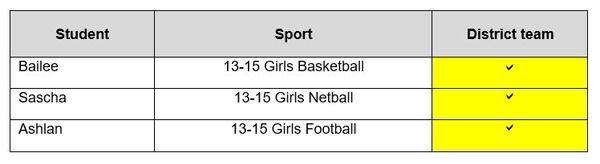
Congratulations to the following students for their selection in QLD School Sporting Pathway teams:
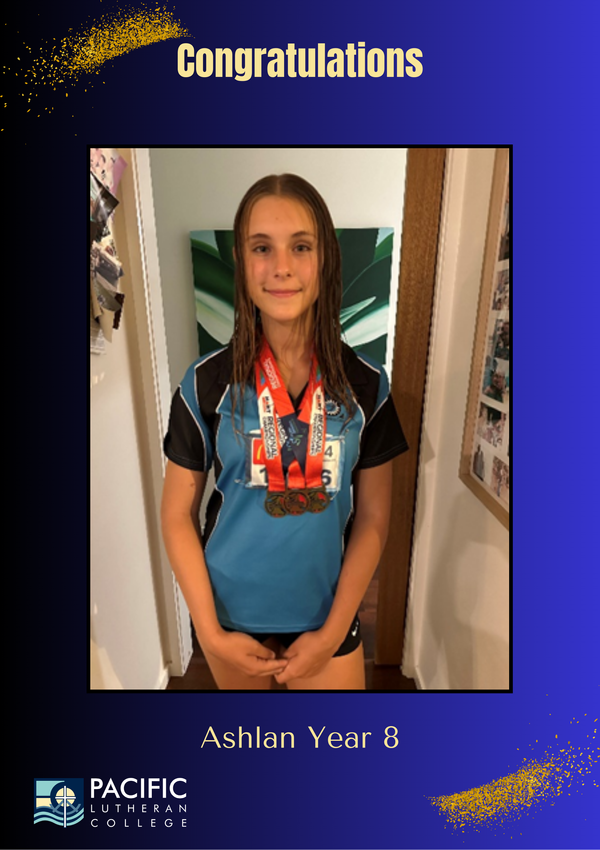
Congratulations to Ashlan in Year 8 for her excellent results in the recent Suncoast Regional Little Athletics Championships. She has qualified for States in the following events.
U13 Girls Discus: 1st
U13 Girls Javelin: 1st
U13 Girls Shot Put: 3rd
Ashlan also attended district soccer trials and was selected in the representative team for the 13-15 Years Girls, to compete at regionals later this month.
Mr Cameron West-McInnes, Head of Sport
Club Sport
Club Sport
Pacific Lutheran College has several sports development programs outside of school hours. These programs encourage participation, giving students the opportunity to be part of a team, and learn basic skills of the game.
The parent-led Pacific FC Soccer and PLC Netball Clubs compete on Saturdays in community competitions throughout the Sunshine Coast.
Pacific FC
REGISTRATIONS
Most spots are filled however we do have the following available:
Families of Pacific Lutheran College are invited to join us for Sunday worship at St Mark’s Lutheran Church, held each week at 9:00am, 14 Bombala Terrace, Caloundra.
During this season of Lent, our worship follows the theme of forgiveness, grace, and making peace with the past, discovering how God meets us not with pressure, but with compassion, renewal, and hope.
Each Sunday includes St Mark’s Makers, a creative, hands-on faith activity for children during worship, helping them explore God’s love in engaging and meaningful ways. Families are invited to stay afterward for morning tea, including a special time of friendship connection as we celebrate birthdays together at the end of each month.
Saturday Sunset Service – Beginning the Journey of Forgiveness
Families are also invited to a special Saturday Sunset Service on 28th February at 5:30pm, offering a quieter, reflective space to pause and begin the Lenten journey. This peaceful service is shaped by scripture, reflection, and prayer, creating space to rest in God’s grace at the close of the day.
A shared meal (provided) and friendship time will follow at 6:15pm, providing a relaxed and welcoming opportunity for connection and genuine friendship. All ages are welcome.
First Communion Preparation Opportunity (Ages 8–10)
St Mark’s is offering a First Communion preparation program for children aged 8 and above led by Pastor Ray Morris and Pastor Mark Winter, Pacific Lutheran College Pastor.
This preparation helps children understand Holy Communion as God’s gift of grace—where we receive Christ’s promise of forgiveness, love, and belonging. Families interested in exploring this important step in their child’s faith journey are encouraged to make contact for further information.
You are warmly welcome to join us at any time as we walk this Lenten season together.




 Kids’ Lit Quiz










 An Invitation to Worship and Community –