When the sun finally broke through early this week, there were a lot of smiles and a lift in people’s steps. The rhythm of weather can remind us of the rhythm of life and the rhythm of relationships. Within all relationships there are times of misunderstanding or where we may feel hurt or disappointed by the actions of a friend, family member, peer, colleague or community member. Taking time to pause and reflect on how to improve a relationship can let the light shine in. Pausing, seeking to understand with empathy can enable us to de-escalate where better ways forward can be found. A reactive approach to conflict often leads to increased tension and more harm. Stephen Covey reminds us that we can only change ourselves.
God invites us to use a different lens when dealing with conflict within our relationships. He challenges us to love and do good for those who hurt us. He invites us to bring light into relationships, even the difficult ones, by being kind and compassionate. This can be challenging to do, but it can be very liberating. Holding less firmly to our hurt and asking God to guide and help us creates space for God’s love to bring light into our hearts. Choosing to respond with kindness creates space for tiny sparks of light that create the space for better ways of being.
Principal’s Log
It was a delight to gather last week to celebrate International Women’s Day. This year’s theme of “Give to Gain” reminds us of the power of collaboration and generosity. When we celebrate diversity within our Pacific community, we create space for people to use their gifts to uplift themselves and those around them. When one person rises, we can all rise. We thank our hospitality team for the high quality food and service they provided and the music staff and students for their talented performances that created a special ambience for the event. We thank the many staff and students who volunteered to support the event and all the members of our Pacific community who took part and created a rich time of connection.
It was exciting to see around 30 students from Years 6-12 come together as Student Academic Advisors to join with our Pacific Learning Executive in investigating ways in which students can contribute to the implementation of our Pacific Learning Attributes across the College. The Pacific Learning Attributes have been developed through our involvement in the Melbourne University Assessment Community with the intent that students grow the capacity to reflect on their capabilities as learners and engage in activities that grow their capacity in each of the attributes. Students have played and continue to play an important role in the development and implementation of the Metacognition Tool Kit. We look forward to the insights that our students will bring into the evolution of the implementation of the Pacific Learning Attributes. We thank Director of Learning, Ms Sue Arahill for her leadership in this important initiative.
We congratulate Eva, Phoebe, Tereza and Georgia who are all finalists in the Sunshine Coast Local Student Art Prize. Families are invited to celebrate and be inspired by the talent of young artists from across the Sunshine Coast at the exhibition of finalists, opening on March 27th at the Caloundra Regional Gallery. We thank our Acting Head of Art, Mrs Marnie Whittaker and her team for inspiring and expanding the talents of our artists.
We give a prayer of thanks for the many blessings that God brings into our community. We pray that God would provide for those within our community, country and internationally who face times of challenge and uncertainty.
Dr Bronwyn Dolling, Principal
From the College Pastor
Interpersonal Relationships
In our text this week, Jesus calls for another way of dealing with conflict within interpersonal relationships. Jesus challenges us to love our enemies, to do good to those who hate us, to bless those who curse us, and to pray for those who abuse us (Luke 6:27&28). Here Jesus challenges us not just to forgive others who hurt or harm us but rather to do good to them and work towards their benefit. This doesn’t mean only doing good to those who do good to us but calls for us to do good to the very people who are not nice to us and may even be acting against us. But this challenge seems almost impossible to our human eyes. It’s often difficult not to respond in a like manner when we feel under attack by others. But that kind of response never improves the relationship. It only tends to increase tension and can lead to relationship breakdown.
What Jesus encourages is that rather than treating others as they have treated us, we are to treat everyone as we would like to be treated (Luke 6:31). We all want to be loved and accepted. Everyone needs to feel cared for and supported. We all need to have relationships of kindness and compassion. We look for fairness and justice to be expressed one to another. We want to experience empathy within relationships that demonstrate honesty and integrity. Everyone wants to be treated as those of value with dignity and respect. So, since this is how we want to be treated then Jesus encourages and challenges us to treat everyone that we deal with, enemies, haters, cursers, and abusers included.
Now this is not at all easy to do. If you are anything like me, the last thing you want to do when someone hurts you is to treat them with kindness in return. Yet this is exactly how God treats us, with unconditional loving kindness, grace and mercy. Jesus’ entire life was an expression of his love, kindness, blessing and prayer for enemies, those who hate, curse and mistreat others, including me. But as followers of Jesus, we not only have forgiveness, but we are also blessed with the Holy Spirit to enable us to grow more and more like Jesus. As we grow in his loving mercy and grace, we become more able to stop before reacting and treat others the way that we want to be treated. This is what it means to become more like Jesus in all our relationships.
God bless.
Pastor Mark Winter
From the Director of Learning
Pacific Learning Attributes
On Tuesday, our Student Academic Advisors, consisting of student representatives from Years 6 to 12, met with the Pacific Learning Executive to explore how they can support the implementation of our Learning Attributes across the College.
During the meeting, students shared ideas and valuable perspectives on how these attributes can come to life in classrooms. Their voice and collaboration will play an important role in shaping how these initiatives develop.
This inaugural group will continue to work alongside staff to support learning initiatives at Pacific. Their first focus will be to help lead the implementation of the Learning Attributes.
We are looking forward to seeing the positive and innovative impact of our Student Academic Advisors as they help strengthen and enhance learning within the Pacific community.
Metacognition involves more than thinking about thinking, it’s about regulating that thinking to improve learning. An important stage of metacognition is monitoring or noticing how learning is progressing and making adjustments when needed.
At this point in the term, some Middle College learners benefit from pausing to reflect on the goals they set earlier in the year. They may have planned to improve their study habits, increase their effort, or focus more carefully in particular subjects. Monitoring encourages them to step back and ask, “How am I staying focused and sticking to the plan?” or “Is this approach helping me learn effectively?”
Other learners may need support to recognise when they are confused or unsure of how to move forward. Parents and teachers can assist by modelling this process aloud. For example: “I’m not sure about this answer, so I’ll check my calculations”, or “I may have missed a step, so I’ll go back through the instructions.” This demonstrates that noticing uncertainty is a normal and valuable part of learning. Monitoring also includes noticing emotional responses to learning. When students recognise feelings such as frustration or discouragement, they are better able to pause, adjust their strategy, or seek support.
Monitoring can help learners to review the strategies they are using to study. Some commonly used approaches, such as rereading notes or highlighting text, can feel productive but might be doing little to strengthen long-term understanding. Research suggests that strategies which require more effort can lead to stronger learning. These are sometimes called desirable difficulties because the added cognitive effort helps students process information more deeply. Approaches such as recalling information from memory (brain dumps and flashcards), explaining ideas in their own words, or regularly reviewing learning over time (quizzes) can strengthen understanding and long-term retention.
Monitoring is one stage of the Pacific Lutheran College Metacognition Toolkit, which helps students plan, check and adjust their learning strategies. Monitoring is the third phase of The PLC Metacognition Toolkit, found on pages 29–33 of the Student Handbook and on Nav.
A simple way parents can support this process at home is by occasionally asking their child what is helping their learning most at the moment, and whether there is anything they might try differently next week.
NAPLAN
Despite the nationwide disruption that affected the start of NAPLAN yesterday, our students demonstrated remarkable calmness and professionalism throughout the day. While schools across the country experienced delays and uncertainty, our students remained patient and focused, adapting well to the circumstances.
Once testing commenced, students approached the assessments with maturity and a positive attitude. Many commented on how much they enjoyed the structured testing environment that NAPLAN provides, embracing the opportunity to challenge themselves and showcase their learning.
Pacific students demonstrated resilience, cooperation and commitment to doing their very best, reflecting the values we encourage and celebrate every day. They showed that they are capable, composed and ready to rise to any challenge placed before them.
Mrs Jo Belchamber, Head of Learning Middle College
From the Director of Student Engagement
Harmony Week and beyond
Harmony Week (16th–22nd March 2026) celebrates Australia’s rich cultural diversity and promotes inclusiveness, respect and a sense of belonging for everyone. During this week we recognise and value the many cultures, languages and traditions that make up our rich Pacific College community. Harmony Week encourages students to learn from one another, build understanding and strengthen the sense that everyone belongs.
During the week, students across Prep to Year 12 will engage in a College wide collaborative activity that will be displayed later in the term in our College Library. The aim of this collaborative activity is to create opportunities for each student to think, talk about and recognise how our differences make Australia a great place to live.
Keep the Conversation Going at Home
Families play an important role in continuing these conversations at home. With so much happening in the world, our young people often hear or see things that can be confusing or unsettling. Harmony Week provides a valuable opportunity to pause and talk together about the importance of respect, kindness and understanding across cultures and perspectives.
Parents might like to keep the conversation going by:
• sharing stories about their own family background, traditions or experiences
• discussing why respect and inclusion matter in our Pacific community
• encouraging open conversations about the different backgrounds and experiences people bring to our Pacific community.
Families may also wish to continue the conversation at home using resources available through SchoolTV, which provides helpful information and conversation starters for parents. For younger students in particular, this short report from Behind the News explores multiculturalism in Australia and why it is something to celebrate. Schools across the country mark Harmony Week as an opportunity to recognise and value the many cultures that make up our nation, helping young people develop understanding, respect and appreciation for the diversity of our Pacific and wider community.
These simple conversation starters help young people develop empathy, perspective and a deeper appreciation for the diverse world in which they live. By continuing these discussions at home, families help strengthen the message we share at Pacific, that everyone belongs and that our diversity is one of our greatest strengths.
Pacific as a Peace Place Year 3- 12 Student Survey
As part of Harmony Week, students across Year 3–12 will also participate in Pacific as a Peace Place during Pastoral Care on Friday 20th March. This is an important opportunity for students to share their voice about their experience of the College, including how safe they feel, their sense of belonging, and how well we are living out our values as a community. The feedback gathered through Pacific as a Peace Place helps us listen carefully to our students and continue strengthening the environment we create together each day.
As a Child Safe Organisation, we are committed to ensuring that every student feels safe, valued and heard. Opportunities such as this allow students to contribute meaningfully to shaping a culture where care, dignity and respect for one another are actively lived across our College.
Middle College Disco
We will conclude Harmony Week with our Middle College Disco, providing students with an opportunity to come together to celebrate a very successful Term 1. Events such as these are an important part of building a sense of belonging and strengthening connection across year levels.
Harmony Week reminds us that when students feel safe, valued and connected, they are more able to learn, grow and contribute positively to our community. It is a joy to see these opportunities, through conversations, collaborative activities and shared celebrations, help continue to shape Pacific as a place where everyone belongs.
Ms Leigh Finter, Director of Student Engagement
From the Head of Learning K-5
5 Habits to Support Learning
This week we are exploring 5 habits you can build on to support your child’s learning that help in creating calm home learning routines, encourage persistence, support organisation and management of emotions.
Learning Habits at Home: Simple Ways to Support Your Child’s Learning
At Pacific Lutheran College, we believe that strong learning habits develop through a partnership between school and home. While students build important skills in the classroom, everyday conversations and routines at home can play a powerful role in helping children become confident and capable learners. Here are a few practical ideas families can try that support learning, independence, and emotional well-being.
1. Ask Questions That Spark Thinking
Instead of asking “What did you do at school today?”, try questions that encourage reflection. Thoughtful questions help children develop awareness of their own learning and build confidence in sharing their thinking. You might ask:
• What was something new you learned today?
• What challenged you today?
• What helped you when something felt tricky?
• What are you proud of today?
• What would you like to learn more about tomorrow?
These kinds of conversations help children develop self-reflection, which is an important part of becoming a self-regulated learner.
2. Create a Calm Home Learning Routine
Children learn best when they have a predictable routine. A calm and consistent approach to home learning can help children feel organised and focused. Some helpful strategies include:
• Setting a regular time each day for home learning or reading
• Creating a quiet space with minimal distractions
• Encouraging short breaks if children become tired
• Celebrating effort rather than perfection
Often the goal of home learning is simply to build positive learning habits rather than complete large amounts of work.
3. Encourage Persistence
Learning sometimes feels challenging, and this is a normal and important part of the process. When children encounter difficulty, gentle encouragement can help them keep going. You might try phrases like:
• “This looks tricky. What could you try next?”
• “I can see you’re working really hard.”
• “Mistakes help our brains grow.”
By focusing on effort and perseverance, children begin to see challenges as opportunities to learn.
4. Support Organisation
Organisational skills develop gradually during the primary years. Small routines can help children take responsibility for their learning. Families can support this by:
• Encouraging children to pack their school bag the night before
• Checking that library books or notices are ready
• Helping children use checklists or simple reminders
These routines build independence and confidence over time.
5. Help Children Manage Big Feelings
All children experience moments of frustration, disappointment, or worry. Learning how to manage these emotions is an important life skill. Parents can help by:
• Listening calmly and acknowledging feelings
• Encouraging children to take a few slow breaths when upset
• Helping them think about possible solutions
• Reminding them that everyone has difficult moments while learning
Developing these emotional skills supports both wellbeing and learning.
We are committed to helping students grow as curious, resilient, and reflective learners. When school and home work together, children develop the confidence and habits they need to flourish both in the classroom and beyond.
Mrs Sue Zweck, Head of Teaching and Learning K - 5
From the Head of Career Development
Careers News
2026 Next Step Year 12 Completers Survey
The Next Step Year 12 Completers survey opens on the 17th March 2026. All Year 12 completers from 2025 will receive a letter from the Minister for Education inviting them to participate in this five-minute survey to help our College understand the different pathways of our graduates. This helps us to improve services for future students, and respondents have the chance to win a MacBook Air.
We ask parents, siblings and friends to encourage our Pacific graduates to complete the survey. They may also be contacted by email or phone from the Queensland Government Statistician’s Office. For more information, please visit http://www.qld.gov.au/nextstep
ATAR Calculators: What are they? And are they reliable?
If you’re in Year 12 in Australia, the biggest thing on your mind at the moment is probably your upcoming ATAR result. You won’t receive it until December, but most universities start taking applications before your exams are even over. So when you haven’t received your ATAR yet, how can you know if you’re on the right track? That’s where ATAR calculators come in.
ATAR calculators take the results of any assessment you’ve done so far and use this raw information to estimate what your final ATAR might be. It’s an easy way of seeing whether you’re on track to get the ATAR you need for your course or future pathway.
Are the results from ATAR calculators accurate?
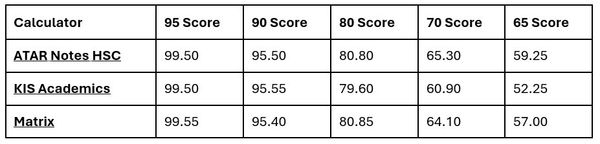
Most of the ATAR calculators out there use data gathered from previous years to give you an idea of where you might fall on the scale. Because assessment results and scaling change from year to year, it’s important to remember that the predicted ATAR you’re given from a calculator most likely won’t be the same as your actual final ATAR. They should only be used to get a rough idea of what to expect. It also depends on the calculator you use. We put the same subjects and same scores into three different calculators, and they all came out with slightly different results:
Subjects used: General English, Math Methods, Biology, Physics, Drama and Ancient History.They might not seem like huge differences, but the lower your results are, the larger the gap becomes between estimates from different calculators.
What else are they useful for?
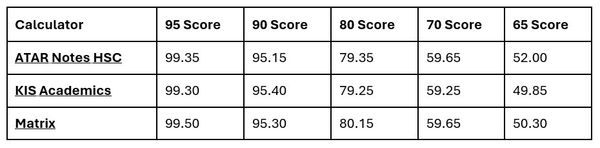
ATAR calculators can also be handy to see how different subjects scale. We used the same results as above but changed to General Mathematics to see how the estimated ATAR would change:
By using the calculator, you get a good visualisation of how taking subjects that scale higher can raise your ATAR.
Where can I find one?
Here are some ATAR calculators we’ve found that you might want to take a look at:
Important:We don’t endorse any particular calculator and keep in mind that the result you get might not be accurate and shouldn’t be exclusively relied on.
A final note
If your ATAR isn’t quite enough to get into your dream course, this doesn’t mean you have to give up. There are lots of alternative pathways you can take to reach your goals.
Year 10 TAFE Taster Program
Year 10 students can apply to attend TAFE one day per week during Term 2 or Term 3. Students can participate in units of competency that provide a deeper understanding of a specific industry. This helps students make informed decisions when choosing future courses or pathways.
The fully funded Taster Programs are designed to fit around high school subjects, allowing students to begin exploring vocational learning while continuing their school studies.
The programs* will offer exposure across a variety of industry areas, including:
Agriculture
Hairdressing
Light automotive
Engineering
Plumbing
Carpentry
Heavy automotive
Health care
Community services
Cookery
Finishing trades
Electrical
Furniture making
*Not all programs are available at the Nambour Campus.
More information is available via the provided link. Applications will open soon. Students are recommended to book a Pacific College Careers Appointment to indicate their interest and discuss further.
How to Book a Careers Appointment
Pacific Senior College students are encouraged to take ownership of their career planning by booking a careers appointment through the Careers Bookings Calendar.
Students can:
Select the type of career-related appointment required
Invite parents to attend (in person or via Zoom)
Manage bookings independently
As a courtesy, students must check with their teacher before missing all or part of a lesson to attend an appointment. Appointments can be booked via the Pacific Lutheran Careers Support link (Office365) or by scanning the QR code.
Mrs Veronica Sanmarco, Head of Career Development
Food for Thought
Navigating Changing Friendships: Helping Our Young People Grow
Friendships are an important part of College life. They help children and young people feel connected, supported, and confident. Much like a garden, the relationships students form need time, care, and the right conditions to flourish. And just as seasons shift, friendships can change too — sometimes blooming brightly, sometimes fading, and sometimes growing in unexpected new directions. At Pacific we see students at every developmental stage learning how to tend their own “social gardens,” discovering which relationships help them grow and how to nurture healthy connections with others.
Why Friendships Change
As children move through different stages of development, their “gardens” naturally grow and evolve.
• Early Years (Prep–Year 3): Young children often make friends through shared play — like seedlings sprouting wherever the soil is softest. Their friendships may change quickly as new games or activities capture their interest.
• Middle Years (Year 4–6): Students start noticing which friendships feel steady and supportive. They begin learning which “plants” need more care, which friendships feel easy, and which might require boundaries.
• Secondary Years (Year 7–12): Older students explore identity and belonging, sometimes shifting friendship groups as they work out which relationships truly help them flourish.
Each stage brings new opportunities to learn about connection, resilience, and how to support others.
When Change Feels Hard
Just as it can be disappointing when a favourite plant stops blooming, it can be upsetting when:
• A long-time friend drifts away
• A friendship group shifts
• Students feel “left out” or unsure where they belong
These experiences are real and meaningful — and they teach young people about renewal, patience, and the natural ebb and flow of relationships.
How We Support Healthy Friendship Skills at School
At Pacific we want to help students learn how to care for their “friendship gardens” by encouraging:
• Positive communication: Speaking kindly, listening closely, and expressing feelings respectfully — like watering relationships with gentle, consistent care.
• Conflict resolution: Learning that disagreements happen, and with the right tools, friendships can grow back stronger.
• Flexibility and openness: Understanding that it's okay for new “flowers” to appear and for the garden to look different over time.
• Inclusivity: Helping every child feel they have space to grow — no matter how big or small their circle.
These skills build resilience and help students form healthy, lasting connections.
How Families Can Help at Home
Parents and caregivers play a valuable role in helping children understand their social worlds. Some supportive strategies include:
• Listen first: Give children space to share their feelings before offering solutions.
• Normalize change: Explain that friendships, grow in cycles. Not every flower blooms at the same time.
• Avoid blame: Encourage children to see friendship shifts as part of life, not as failures.
• Encourage diverse connections: Help them “plant new seeds” by trying different activities or meeting new peers.
• Model healthy friendships: Share your own stories of how relationships have grown, changed, and adapted over time. Encourage our children to go where they are celebrated not just tolerated.
Friendships as a Journey
We want students to know that their garden doesn’t have to look perfect — it simply needs care, patience, and the understanding that growth takes time. Changing friendships are a natural part of learning who they are and what they value. Supporting healthy relationships is central to the social and emotional development of every student.
Mr Brendan Macaulay, Head of Student Counselling and Mrs Amanda Kratzmann, College Counsellor
College News
Visual Arts News
We are excited to announce that three Pacific Year 12 students are finalists in the Under 18 category of the Sunshine Coast Local Student Art Prize. Congratulations to Eva, Phoebe, Tereza. Their selected artworks were developed from their IA1 Inquiry, inspired by our stimulus excursion last year — a wonderful example of how research, exploration and creative practice come together in the classroom. The exhibition opens Friday 27th March at the Caloundra Regional Gallery. We are incredibly proud to see their work recognised in this prestigious local exhibition. If you're on the Sunshine Coast, be sure to visit and support these talented young artists.
Congratulations to Georgia in Year 6 who is a finalist in the Sunshine Coast Council Calondra Regional Gallery Local Student Art Prize 2026 in the Under 13 Years category. We are thrilled to have such a talented young artist in our Pacific community.
Ms Marnie Whittaker, Acting Head of Department - Visual Arts and Teacher - Design
Project Paws
Project Paws was created in 2025 by 4 Pacific Year 8 Girls for their entry into the National Future Problem Solving competition. These students are now preparing for the international competition to be held in Indiana in June and are working hard to continue to educate our school community about the importance of responsible pet ownership.
We are very excited that each Project Paws entry in The Compass each week will feature one of the pets who are a part of our school community. You might be lucky enough to find a photo of your pet!
Did you know? - Approximately 41% of dogs and 32% of cats in Australia are considered overweight or obese.
How can you help? - Loving your pet means not feeding them human food- it means giving them proper pet food.
Enrichment of the week!
Use a muffin tin, and scatter treats at the bottom of each mould. Then cover the treats with tennis balls and let your pet try to get them out.
Tayla, Jing Han, Alani, Louise and Ayla - Pacific Plus Year 8
Teddy Bears Picnic
This week our Year 12 students connected with their Year 2 buddies for a special Teddy Bears’ Picnic.
The wet weather created a calm and intimate atmosphere, allowing time for meaningful conversations and shared moments. Both Year 12 and 2 students brought a teddy from home, making the experience even more special as our Year 12s shared stories of their own childhoods through their favourite toys.
It was wonderful to see the strong connections already forming between buddies, and we look forward to watching these special relationships flourish throughout the year. This is an annual tradition spanning many of the 25 years of Pacific that Senior and Foundation College students adore.
Inspired by the themes of Beginnings/daily life, /Love/Friendship and Marriage and Death.
Our Pacific community is invited to contribute photographs that capture the everyday beauty and meaning of Life, Love and Death, the three powerful themes explored in the classic play Our Town, this year's Senior Drama Production which will be performed at the Events Centre in May.
These themes reflect the stages and experiences that shape all of us. Through photography, we hope to build a visual collection from our community that reflects our shared human journey which will be incorporated into the Production for audiences to connect and engage with the themes in the play in a more personal way.
Act/Theme 1: Beginnings/daily life
Images that celebrate the ordinary moments and rhythms of everyday living.
Possible photo ideas to submit:
• Birth, newborns etc...
• Children walking to school or playing in a park
• A morning routine (making coffee, reading the newspaper, opening a shop)
• A bustling street, market, or neighbourhood scene
• Gardening, cooking, or family dinners
• Sunrise or people beginning their workday
• A flower opening
These photos should capture the simple, everyday moments that make up daily life.
Act/Theme 2: Love
Images that show connection, relationships and human warmth.
Possible photo ideas:
• A wedding or engagement moment
• Couples holding hands or sharing a quiet moment
• A parent comforting a child
• Friends laughing together
• Grandparents with grandchildren
• Acts of kindness between strangers
These photographs should reflect affection, companionship and the bonds that bring people together.
Act/Theme 3: Death
Images that respectfully explore remembrance, loss, reflection, and the passage of time.
Possible photo ideas:
• Photos of lost loved ones
• A cemetery or memorial site
• Candles or flowers left in remembrance
• An empty chair or quiet room that suggests absence
• Autumn leaves falling or seasonal change
• A sunset, fading light, or quiet landscape
• Hands holding old photographs or heirlooms
These images need not be literal—they can be symbolic or reflective, expressing memory, legacy, or the quiet moments when we contemplate mortality.
How to submit
• Photographs may be literal, symbolic, or artistic interpretations of the themes.
• All ages and skill levels are encouraged to participate.
• Images may be recent or taken in the past.
• Upload your images using this FORM. You will need to sign into your MYPLC account to upload your photographs.
Through these shared images, you can be a part of the Pacific Senior Production. We hope these collated images create a collective portrait of our community—its daily life, its connections and the memories that endure.
Ms Samantha Barrass, Community Liaison and Communications Coordinator
Clean Up Australia Day – Pacific College Clean-Up Event
Students are invited by the Environmental Pacific Action Group to get involved in our upcoming Pacific clean-up event as we support Clean Up Australia Day and the Project PAWs’ clean-up initiative for Koda. This is a great opportunity for students to come together, make a positive impact on our College environment, and show pride in our Pacific community.
The clean-up activities will take place during lunchtime across the College in Week 9:
• Monday 23rd March (lunchtime): Middle and Senior College
• Thursday 26th March (lunchtime): Junior College
Students will be organised into different areas around the College and will work together to help tidy the grounds and collect litter. By participating, students will be contributing to maintaining a clean, safe, and enjoyable College environment for everyone.
This event is all about teamwork and community spirit. Even small actions like picking up a few pieces of rubbish can make a huge difference when we work together. Students are encouraged to bring their friends, get involved during lunchtime, and help maintain our College as a clean and green place.
We look forward to seeing many students take part and help to make a positive difference
Mrs Jana Sajtos Hobbs, Teacher – Maths & Science, and Charlotte, Captain of the Environmental Pacific Action Group
Friends of Pacific
Connecting College and Community
General Meeting – Tuesday 17th March in the College Library -6pm for a 6:30pm start.
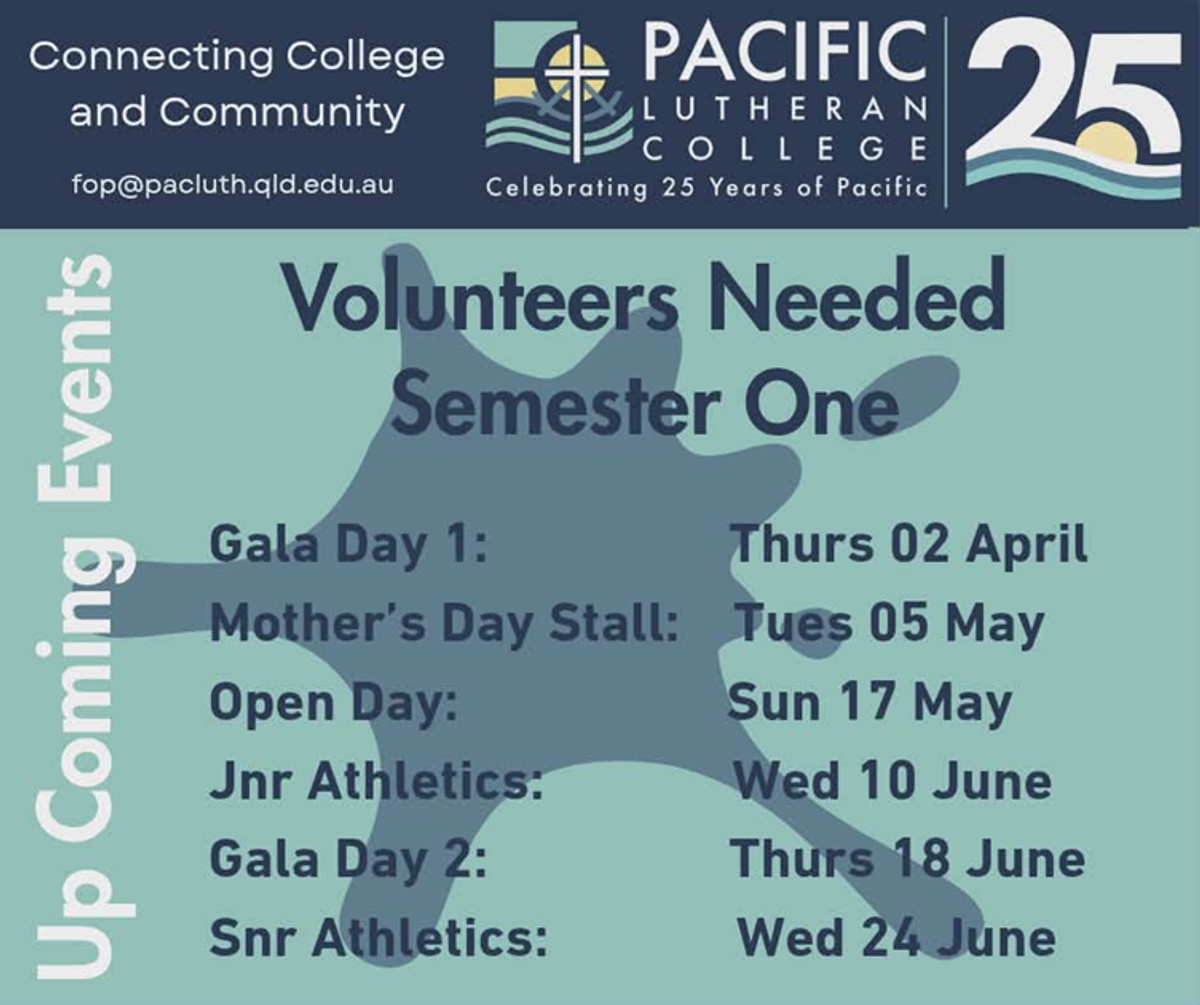
Volunteer sign-up sheet links below- join us to support our students and be a part of our vibrant FoP community.
Kayaking Instructor Course, Friday, March 20th, at Lake Kawana
For Pacific friends and families.
I am always looking for parents and friends of the College to help with the PLC Kayaking Paddle Excellence program.
Allana Bold from Paddle Australia is running a flatwater kayak supervisor training course at Lake Kawana on Friday, March 20th, commencing at 8am and concluding by 4pm. It is a practical and theoretical course that enables adults to teach kayaking skills to up to 8 students in flatwater environments.
The course requires people to pass a theory exam, on-water paddling skills and then participate in a number of training sessions under an accredited coach, who can be Mr Gary Graves during College training sessions.
All equipment is provided, but the course will cost parents around $300.
Parents will then by accredited Flat Water Kayaking Instructors through Paddle Australia for 3 years.
Mr Gary Graves, TIC of the PLC Paddle Excellence Program
SCISSA Results
Well done to our SCISSA Soccer teams on their fantastic efforts in Round 5. The Junior B Boys travelled to St Andrews College and took the game right to the final whistle, only going down narrowly after leading at times. The Junior A Boys and Girls travelled to Suncoast College where the girls won in a commanding fashion before the boys fought out a tight victory. The Junior A Boys have been training hard, and the result was a testament to the work they have been putting in. At home, our Intermediate A Boys displayed great team cohesion and composure to win 3-1 and our Intermediate Girls fought back to find a late equalizer in their game.
Our SCISSA Volleyball teams continue to find improvement as they progress throughout the season. Senior A Boys and Girls went down in some close games against Suncoast College. A special mention goes to Senior B Boys who picked up a handy win on our home courts.
We wish our teams all the best in their fixtures next week.
Student Acknowledgement
Congratulations to Georgia in Year 6 for being selected in the blue team for CDNA netball representing Caloundra at the State Age Titles on the Gold Coast in July.
We wish all the best and congratulations to the Pacific students listed below who will be participating in representative carnivals and championships:
Well done and good luck to our Year 7-12 swimmers who will represent Pacific and the Sunshine Coast in the regional swim team at State Championships from 22-24th March:
Gemma Year 9
Elsie Year 7
Mark Year 7
Kyle Year 8
Sarah Year 10
Emily Year 12
Marlee Year 7
Lucia Year 8
Cooper Year 9
Congratulations and good luck to our Year 7-12 Pacific students who have been selected into Independent District teams to compete at upcoming Sunshine Coast Regional Carnivals:
Hayden Year 11 Touch Football District Team
Chase Year 10 Touch Football District Team
Cade Year 10 Touch Football District Team
Kai Year 12 Touch Football District Team
Harry Year 9 Netball District Team
Tane Year 7 Netball District Team
Brac Year 9 Netball District Team
Mr Cameron West-McInnes, Head of Sport
Club Sport
Club Sport
Pacific Lutheran College has several sports development programs outside of school hours. These programs encourage participation, giving students the opportunity to be part of a team, and learn basic skills of the game.
The parent-led Pacific FC Soccer and PLC Netball Clubs compete on Saturdays in community competitions throughout the Sunshine Coast.
Pacific FC
2026 Club Kit and Sponsors
Welcome to the 2026 season! We’d like to extend our thanks to this year’s kit sponsors: Team Du Preez - Steven and Jenna Du Preez, GB Toys - Charlie Watham and Green Beginnings - Andrew and Narelle Watham. We excitedly unveiled our new club kit on Saturday, featuring the jerseys, socks and a special 25th anniversary hat for all players. The response was overwhelmingly positive, and we look forward to seeing our players wearing the teal, white and navy out on the pitch.
We also thank Caloundra RSL, Guzman (Birtinya and Kawana), Laserzone, Tutto Freddo and Sunshine Coast Wholesale Meats for coming on board as sponsors of the club’s encouragement awards.
We appreciate Mr Darren Hooper and the Pacific grounds staff in the wonderful work they did to prepare the fields for the season.
MATCH REPORTS - ROOBALL CARNIVALS
U6 Tigersharks - Manager Jess
It was great watching our U6 Tigersharks out there! So much confidence, speedy feet and some lovely team play already. It’s awesome to see the kids starting to find their rhythm together. A special shout out to Chester, Boston and Thiago for their Player of the Match efforts — well deserved! We’re really looking forward to a fun season ahead with this crew.
U6 Hammerheads - Manager Michelle
We had a fabulous start to the season for the Hammerheads. It was an absolute joy to watch the kids. Even though it was hot and muggy, they all played with awesome energy and big smiles. There were some fantastic goals scored and plenty of great moments throughout the games. A special shout out to our Players of the Match – Rylan, Keyan and Ryder for their awesome efforts. Well done boys! A big thank you to our coaches Sarah and Chris for all their support and encouragement. We are very excited for the season ahead!
U11 Angelfish – Manager Renee
Angelfish vs Buderim Sunshine
3-0 Round 1 Girls Div
Welcome to our 2026 Angelfish. What a gloriously muddy start to the soccer season, we wouldn’t have it any other way! Thanks to Coach Andy for leading the girls, especially being the first time we have played on the bigger field. The girls didn’t seem to mind the sideways rain a bit, and gave it their all, with some clever passing and dribbling. Great work all round to finish with a win 3-0. We can’t wait to see what else you can do this season!
Awards from Coach Andy were:
Georgia - as goalie: Coach’s Award for some fabulous saves
Mila - the match captain: was also awarded Player of the Match for some determined play to score our first 2 goals for 2026.


 Project Paws was created in 2025 by 4 Pacific Year 8 Girls for their entry into the National Future Problem Solving competition. These students are now preparing for the international competition to be held in Indiana in June and are working hard to continue to educate our school community about the importance of responsible pet ownership.

 Students are invited by the Environmental Pacific Action Group to get involved in our upcoming Pacific clean-up event as we support Clean Up Australia Day and the Project PAWs’ clean-up initiative for Koda. This is a great opportunity for students to come together, make a positive impact on our College environment, and show pride in our Pacific community.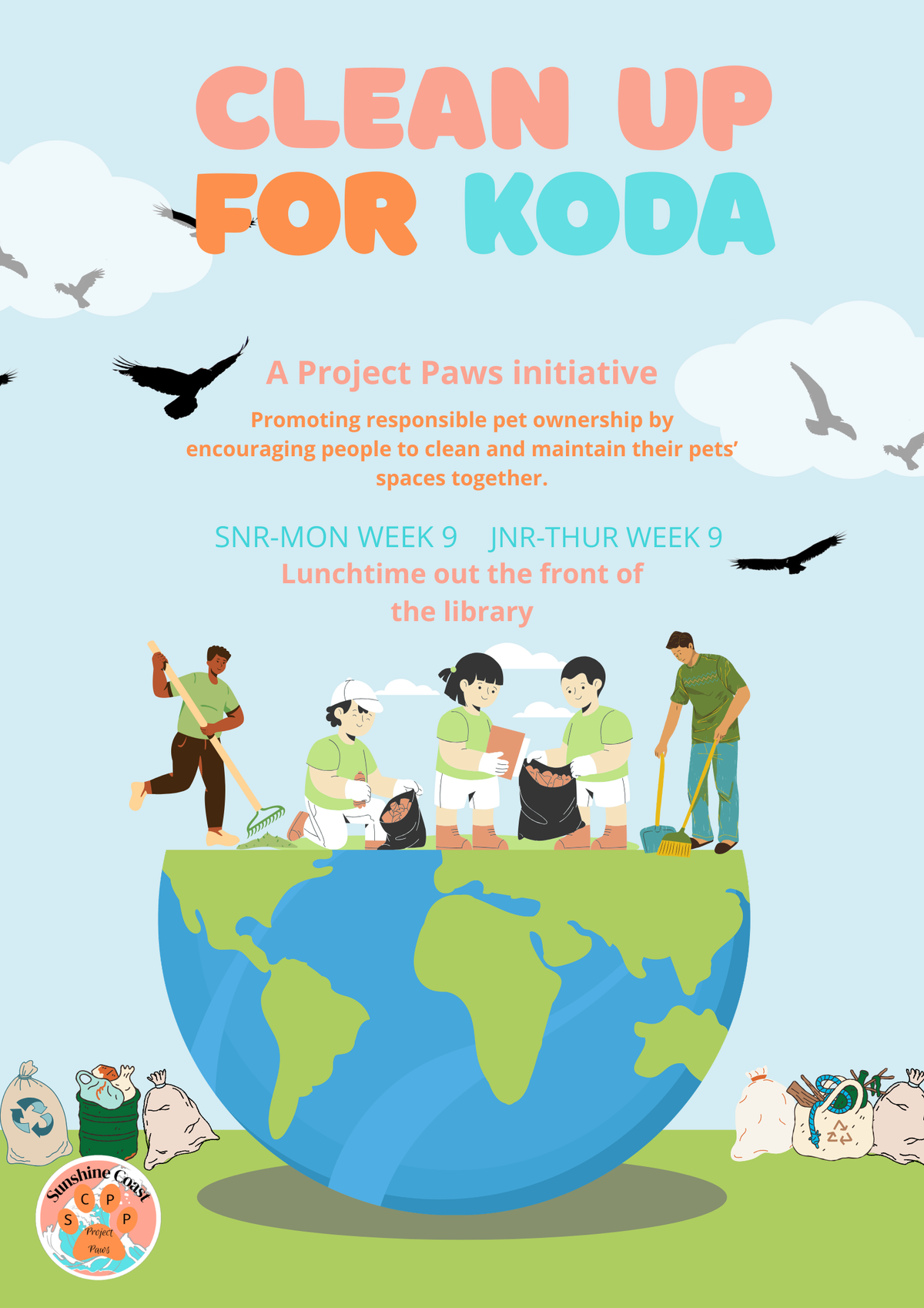

 Sharing a common mission and ministry with Pacific Lutheran College