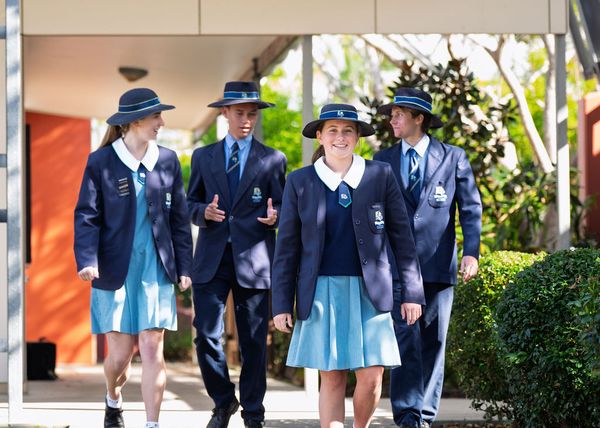
Each of us play a role within our families and communities to create oases where people find a safe place, can rest, feel cared for, be refreshed, revitalised and energised for the journey ahead. Growing awareness of how our words and actions and the words and actions of others including media in all its forms shape our thinking can help us to be mindful of the spaces we create for ourselves and others. Families, friendship groups and communities are not perfect. There will be times where choices are made that hurt and damage relationships. We have a choice in how we engage and respond. Spending time together through walking and talking, sharing a meal or engaging in an activity together creates opportunities for connection and listening. Speaking and acting kindly with the intent of building up creates safety and space for growth. When differences emerge listening deeply to seek to understand and learning to forgive opens greater possibilities of finding a third way. These are habits and ways of being and thinking that we can nurture within ourselves, our families and our communities.
God encourages us to be careful in how we speak, to speak to build others up according to their needs, so that it benefits those who listen. We are encouraged to be thoughtful and aware of how we use our words. We can create an oasis within our families, friendship groups or community where people find safety, care, connection, understanding and hope.
Principal's Log
Being aware of our thoughts and emotions and being able to make good choices to strengthen relationships and growth through our words and actions requires intentionality, patience and reflection. Throughout the newsletter, different leaders highlight how questions, conversations and ways of being within the College are promoting the growth of self awareness and reflection. Families of children of all ages can support growth through the reflection provided in the Chaplain’s article and the use of questions highlighted within the Director of Student Engagement’s article on academic reflection, the Head of Student Engagement Senior College’s article on restorative practices, the Head of K-5’s article on building resilience and the Counsellors article on building emotional literacy. We are privileged to be in a community where we can walk together as parents, staff and young people to encourage rich growth across all dimensions of life.
This week, families will have received the Compass Review which highlights the growth that has occurred as we have addressed the intents of the 2023-2026 Strategic Plan. The strategic plan has had a strong focus on growing capabilities within young people to flourish across all dimensions of life. This deeply human approach to strategic planning enables the College to be agile in growing and adjusting experiences to nurture growth within young people, our staff, parents and College Council within a rapidly changing world. The Compass Review highlights the depth and breadth of leadership that has inspired and created experiences and opportunities for purposeful growth. I would encourage all families to read and celebrate the leadership, engagement and progress of our community.
Parents, students and staff are invited to join our College Council in contributing to the development of our 2027-2030 Strategic Plan by participating in our Strategic Planning Day on Saturday, 15th August. The day facilitated by Louka Parry and Dr Anne Knock from The Learning Future provides the opportunity for our community to build on each other’s thinking as we reflect on the past, current and future strengths and needs of our community. Community members are invited to register by Sunday 9th August via the email invitation that has been sent.
Parents will also have the opportunity to contribute to the shaping of the Strategic Plan by completing the Annual Review that will be sent out next week.
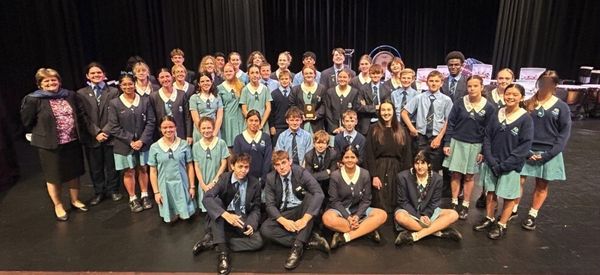
Congratulations to all of our musicians who have had the opportunity to participate in the Sunshine Coast Junior Eisteddfods over this past week. I had the privilege of listening to the performance of our Concert Band who were awarded 1st place in their section of the competition. Their musicianship and ability to tell story through their pieces was very moving. Well done to all individuals and ensembles. We congratulate and thank our instrumental teachers, Head of Instrumental Music Mrs Helen Williams, Head of Music Ms Krist-elle Hill, and teachers Mr Jarvis Miller and Ms Linley Chai for inspiring a joy in the love of music and the growth of tremendous talent. We thank our parents for the very important role they play in nurturing and supporting their children’s growth.
Engagement with our Seishin students and staff over the past week has provided tremendous opportunities for growth of cultural understandings, development of language skills and friendships. I am always amazed at the strength of connection and growth that occurs over such a short time period. Thank you to our host students and families, and our shadow students for your warmth of welcome and hospitality. A particular thank you to Mrs Michiko Hauser for the extraordinary amount of time and expertise that goes into the planning and leadership of our sister school exchanges.
Conversations with our Year 7 students indicate that they greatly valued their time on their outdoor education experience last week. The Coordinator of the Somerset Dam experience gave high praise to our staff and students for the quality of the program and the positive and strong engagement shown by our students. Thank you to Ms Rebekah Horsey
Miss Tiffany Harman, Mr Rob Belchamber, Mr Liam Jacka, Mr Cam West-McInnes, Mr Brett Kersnovske, Miss Taylor Edwards, Ms Megan Bancks, Mrs Sharon Middleton, Miss Katie Graves and Mr Kya Brace for their attendance and leadership. A particular thank you to Mrs Lisa Muir for her administrative support and to the Head of Outdoor Education, Mr Paul Brace, for his very capable leadership of this transformational program.
We look forward to our Grandparent’s Day tomorrow that is always a special part of our year.
May God grant us the wisdom and humility to listen well, to pause and speak in a way that builds people, families and community.
Dr Bronwyn Dolling, Principal
From the College Chaplain
Building Strong Family Connections
Families are the first place where children learn what it means to love, encourage, forgive, and belong. In a world where criticism is often louder than kindness and people are quick to point out faults, it is important that our homes be places where words bring hope, confidence, and strength.
In Ephesians 4:25–32, Paul reminds us to live in ways that strengthen our relationships. He encourages us to speak truthfully, to be careful with our words, to show kindness and compassion, and to forgive one another just as Christ has forgiven us. One verse, in particular, stands out:
"Do not let any unwholesome talk come out of your mouths, but only what is helpful for building others up according to their needs, that it may benefit those who listen." (Ephesians 4:29)
These words are as relevant today as they were when Paul first wrote them. We live in a society where it can sometimes feel easier to criticise than to encourage. Social media, the news, and even everyday conversations can become focused on what is wrong rather than what is good. Our children are growing up surrounded by these messages, making it all the more important that they experience something different within their own families.
Our homes should be places where mistakes become opportunities to learn rather than reasons for shame, where words are chosen to encourage rather than discourage, and where each family member knows they are deeply loved and valued. A genuine compliment, a word of gratitude, an expression of belief in someone's abilities, or a simple "I'm proud of you" can have a lasting impact.
When children regularly hear words that build them up, they begin to see themselves through a lens of confidence, hope, and belonging. Just as importantly, they learn to extend that same encouragement to others. The habits formed around the family table often become the habits they carry into the classroom, the playground, and eventually the wider community.
As I often say, we are human, and we are not always going to get it right, but I encourage you to be intentional about building one another up. Look for opportunities to notice the positive, celebrate effort, express gratitude, and speak words that give life. And when we get it wrong, be humble enough to ask for forgiveness. While our world may often focus on tearing people down, we have the privilege of creating homes that reflect Christ's love by lifting one another up.
Together, may we continue to build families, and our school community, where kindness is freely given, forgiveness is readily offered, and every person is reminded of their God-given worth through the words we choose to speak.
Mrs Larissa Whincop, College Chaplain & Wellbeing Officer
From the Director of Student Engagement
Reflecting on Semester One: Academic Reflection and Academic Care
Over the next two weeks, students will participate in our Academic Reflection and Academic Care program during Pastoral Care Group sessions. This important process provides students with the opportunity to pause, reflect on their learning journey throughout Semester One, and identify meaningful goals and strategies for continued growth during Semester Two.
As we move through the second half of the year, it is important that students take time to look beyond grades and assessment results to consider the learning habits, efforts, successes, and challenges that have shaped their experience so far.
Looking Back to Move Forward
Reflection is a powerful learning tool. By thoughtfully examining their Semester One experiences, students can better understand what has contributed to their successes and where opportunities for growth exist.
Throughout the process, students will be encouraged to consider questions such as:
What achievements am I most proud of from Semester One?
Which study habits or routines helped me perform at my best?
What challenges did I encounter and how did I respond to them?
Where have I demonstrated growth as a learner?
What would I like to improve during Semester Two?
These conversations are designed to help students recognise that learning is an ongoing journey. Reflection allows them to celebrate progress, acknowledge setbacks, and develop practical strategies to continue improving.
Academic Care: Supporting Student Growth
Alongside reflection, students will engage in Academic Care conversations with their Pastoral Care teachers. These discussions provide an opportunity to review Semester One reports, analyse learning behaviours, identify areas requiring additional focus, and develop realistic goals for the remainder of the year.
Importantly, Academic Care is not about dwelling on what has not gone well. Rather, it is about understanding what can be learned from Semester One and identifying clear actions that can lead to future success.
By developing greater awareness of their learning habits and taking ownership of their academic progress, students strengthen important skills such as self-management, resilience, and goal-setting.
How Parents Can Support the Reflection Process
Parents and caregivers play an essential role in helping students make the most of this experience. Honest, supportive conversations at home can help students gain valuable insights into their learning journey.
As you discuss Semester One together, consider asking:
What are you most proud of from this semester?
What was your biggest learning success?
Which subjects challenged you the most, and what did you learn from those experiences?
What habits helped you stay organised and engaged?
What goals would you like to set for Semester Two?
How can we support you in achieving those goals?
These conversations help shift the focus from simply reviewing results to understanding the habits, behaviours, and mindset that contribute to long-term success.
Celebrating Growth, Not Just Achievement
While academic outcomes are important, we encourage families to recognise and celebrate the many ways students have grown throughout Semester One. Growth may be reflected in improved organisation, greater independence, stronger perseverance, increased confidence, or a willingness to seek support when needed.
Acknowledging these qualities reinforces the message that success is built through effort, reflection, and continuous improvement.
A Partnership for Success
The Academic Reflection and Academic Care process is most effective when students, families, and the school work together. By encouraging thoughtful reflection on Semester One and supporting goal-setting for Semester Two, we can help students develop the confidence, ownership, and self-awareness needed to thrive both academically and personally.
Thank you for your ongoing partnership and support. We encourage you to take time over the coming weeks to reflect with your child on their Semester One journey, celebrate their achievements, and help them identify the opportunities that lie ahead as they continue to grow and learn.
Ms Leigh Finter, Director of Student Engagement
From the Head of Student Engagement Senior College
Examining Restorative Practices in School
Building Relationships Before Resolving Conflict
Restorative practice is a relationship-centred approach that helps students learn from conflict rather than simply receive consequences. Instead of asking, “What rule was broken?”, restorative practice asks, “What happened, who has been affected, and how can we make things right?” This shift promotes accountability, empathy, belonging, and relationship repair. Restorative practitioners such as Margaret Thorsborne argue that lasting behaviour change occurs when schools focus on strengthening relationships and repairing harm rather than relying solely on rule enforcement and punishment.
At the heart of restorative practice is a simple belief: relationships are the foundation of learning, wellbeing, and behaviour. Thorsborne emphasises that restorative practice is not something educators do only after conflict occurs; it is a way of being that proactively builds trust, connection, and a sense of community every day. When strong relationships exist, accountability becomes more meaningful because students are motivated to repair harm done to people they value. The people in their community.
Two simple but highly effective restorative strategies will be discussed in this article: “Connect Before Correct” and the “Walk and Talk.”
Connect before Correct
Connect Before Correct reminds parents and educators alike that students are less able to think rationally when emotions are heightened. During moments of frustration, anger, or embarrassment, activity associated with the brain's emotional systems, particularly the amygdala, can override the functions of the prefrontal cortex, which is responsible for reasoning, self-regulation, decision-making, and perspective-taking.
By first acknowledging emotions, listening without judgment, and creating psychological safety, parents and educators help reduce emotional arousal and re-engage the student's capacity for reflection and problem-solving. We refer to this process as co-regulation. This approach aligns strongly with Thorsborne's work, which emphasises that students are more willing to accept responsibility when they feel respected, heard, and understood. Correction is most effective when it occurs within a relationship characterised by trust and dignity.
The Walk and Talk
Walk and Talk is a practical strategy for building connection. Walking side-by-side can reduce the intensity of face-to-face interactions, lower defensiveness, and create a calmer environment for discussion. Many students find it easier to speak honestly while moving, allowing the conversation to become collaborative rather than confrontational.
The goal is not simply to solve the immediate problem but to create the conditions for genuine reflection, empathy, and relationship repair. In restorative practice, the quality of the conversation and reflection is often more important than the speed of the outcome.
Building Conflict Resolution Schema
Restorative conversations strengthen students' conflict resolution schema: the mental frameworks they use (just like we do) to understand and respond to disagreement. Every restorative interaction, every restorative conversation provides an opportunity for students to recognise emotions, consider the impact of their actions, listen to different perspectives, and generate solutions collaboratively. Over time, these repeated experiences strengthen the neural pathways associated with emotional regulation, empathy, and responsible decision-making.
Thorsborne's work highlights the importance of affective statements and restorative questions in this process. Rather than telling students what they have done wrong, we invite reflection through questions such as:
What happened?
What were you thinking at the time?
Who has been affected by what happened?
What have you been thinking about since?
How do you think they were affected?
What needs to happen to make things right?
What’s been the worst of it?
What might you do differently next time?
These questions encourage students to move beyond blame and towards understanding, responsibility, and repair.
Developing Resilience Through Restoration
Restorative practice also builds resilience. Rather than viewing mistakes as failures, students learn that conflict is a normal part of relationships and can be addressed constructively. They experience adults as partners in learning rather than simply enforcers of rules. As students participate in repairing harm and rebuilding trust, they develop confidence in their ability to overcome challenges, resolve disagreements, and contribute positively to their community.
This approach helps create a college culture where students feel connected, respected, and accountable to one another. Research and practice consistently show that when schools prioritise relationships, they strengthen student wellbeing, positive behaviour outcomes and access to learning and skill development.
In the playground:
During lunchtime, two Year 9 students argue during a basketball game. Voices are raised, one student walks away frustrated, and both arrive at class upset.
The students are seen by a Head of House, and rather than immediately assigning consequences, the teacher invites each student for a brief Walk and Talk. The teacher begins by connecting first:
"I can see you're frustrated. Tell me what happened from your perspective."
Each student is listened to without interruption. Once emotions have settled, the teacher guides reflection using restorative questions, which may include:
What happened?
What were you thinking at the time?
What have you thought about since?
Who do you think has been affected by what you did?
How do you think they felt?
What could you do to repair the situation?
What might you do differently next time?
On this occasion, the students agreed to apologise, clarify the misunderstanding, and establish expectations for future games. The immediate conflict has been processed, but more importantly, they have practised emotional regulation, perspective-taking, empathy, and collaborative problem-solving. Through repeated restorative conversations like this, students gradually develop the cognitive and social skills that underpin resilience, respectful relationships, and lifelong conflict resolution.
References
Berboth, S., & Morawetz, C. (2021). Amygdala-prefrontal connectivity during emotion regulation: A meta-analysis of psychophysiological interactions. Neuropsychologia, 153, 107767.
Morrison, B. E., & Vaandering, D. (2012). Restorative justice: Pedagogy, praxis, and discipline. Journal of School Violence, 11(2), 138-155.
Thorsborne, M. (2002). Restorative Practices in Schools. Routledge.
Thorsborne, M., & Blood, P. (2013). Implementing Restorative Practices in Schools: A Practical Guide to Transforming School Communities. Jessica Kingsley Publishers.
Thorsborne, M., Riestenberg, N., & McCluskey, G. (Eds.). (2019). Getting More Out of Restorative Practice in Schools: Practical Approaches to Improve School Wellbeing and Strengthen Community Engagement. Jessica Kingsley Publishers.
Zehr, H. (2015). The Little Book of Restorative Justice (Revised ed.). Good Books.
Mr Nigel Farley, Head of Student Engagement – Senior College
From the Head of Staff and Student Engagement P-5
Building Resilience: From Cricket to Confidence
The story behind resilience:
Over the past few weeks at our assemblies, we discussed the Bluey episode "Cricket" with our students. An episode that captures the true meaning of resilience and family.
In this episode, Rusty struggles against a faster - older bowler, but receives advice from his dad (deployed overseas): "As you grow, you'll face harder things than a cricket ball. You have two choices: back away and get out, or step in front and play a pull shot."
Rusty chose to step in. He practised hard, took risks, and overcame the challenge, while remembering to value his little sister.
This sentiment perfectly captures our "You Can Do It" theme this term: Confidence. But here's the truth, nobody feels confident all the time. Resilience isn't the absence of doubt; it's the skill to move through it.
How young brains build resilience:
When students face uncertainty or difficulty, their brains often default to ANTS (Automatic Negative Thoughts): What if we fail? What if we aren't good enough? This is normal—it's the amygdala trying to keep us safe. But to build resilience, students need to access their thinking brain and reframe these thoughts into PETS (Positive Encouraging Thoughts): What if we DON'T fail? What if we get better at something?
Across the Foundation and Junior College, we're teaching "The Three R's": Recognise, Respect, and Resolve - a framework that helps young brains do exactly this:
Recognise: Name what's happening emotionally (the alarm bell’s going off)
Respect: Validate that discomfort is real and temporary - not weakness
Resolve: Access concrete tools (breathing, movement, connection, a break) so the thinking brain can come back online
Young brains need regulation before they can reframe thoughts. The Three R's gives them that pathway.
The journey:
Like Rusty, every day our students face situations that present uncertainty. Resilience is a skill we can develop and strengthen. The systems we arm ourselves with naming our emotions, respecting them, and choosing the right tools, allow us to rebuild confidence through experience.
As your child’s first teacher you know your children the deepest. You have a privileged position to encourage your children when the going gets tough. To be ok with them failing, to be there to guide them when they do and be a sounding board for their pathways forward. By doing this, you are expressing to them they’ve got this.
Welcoming Grandparents and Special Friends
This week, we look forward to welcoming Grandparents and Special Friends to our campus - a highlight of the college year. This special day is an opportunity to celebrate the important role these cherished family members play in the lives of our students, and to share in the learning journey that unfolds both inside and outside the classroom.
Our students are eager to showcase their progress and learning, and there is always a wonderful buzz of excitement across the Junior College. Conversations flow as students and their extended families reflect on how schooling has evolved over the years and explore the opportunities now available to today's learners.
Grandparents are like walking history books - rich with wisdom, stories, and life experience. They offer thoughtful advice, grounded in the past, helping younger generations navigate life's challenges. Their presence provides a deep sense of connection to family roots, enriching our lives with love, perspective, and knowledge.
We sincerely thank you for attending this Friday. Your presence reflects the vital role that extended family and community members play in shaping the lives of our young people. We hope the day offers you a small insight into life at our college, and we are grateful to our teaching, hospitality, grounds, and music staff for their commitment and planning in bringing the day to life.
We look forward to welcoming you back in 2027.
Take care and God Bless.
Mr Damian Davis, Head of Staff and Students P-5
Food for Thought
Helping Children Build Emotional Literacy
As parents, we spend a great deal of time helping our children develop academic, social, and practical skills. Equally important is helping them understand their emotions. Emotional literacy, the ability to recognise, name, and talk about feelings, is a key foundation for wellbeing, resilience, and healthy relationships.
Emotions are our mind and body's way of responding to experiences. They provide valuable information about what is happening around us and within us. There are no "good" or "bad" emotions. Feelings such as sadness, anger, fear, and disappointment all serve a purpose and help us make sense of our experiences.
Children are not born with a sophisticated emotional vocabulary. As parents, we spend a great deal of time helping our children develop academic, social, and practical skills. Equally. Like reading or maths, emotional understanding develops over time.
In the early years, children can learn basic emotions such as:
Happy
Sad
Angry
Scared
Excited
During the primary years, their vocabulary can expand to include:
Frustrated
Nervous
Proud
Embarrassed
Disappointed
Lonely
As adolescents mature, they can begin to understand more complex emotions such as:
Anxiety
Guilt
Gratitude
Overwhelm
Empathy
Regret
Vulnerability
When young people can accurately identify what they are feeling, they are better able to manage those emotions. A teenager who recognises they are feeling anxious, rather than simply "stressed" or "angry", is often more able to seek support and use effective coping strategies.
Parents play an important role in this learning. One of the simplest strategies is to model emotional language in everyday conversations. Instead of saying, "I've had a bad day," try, "I'm feeling frustrated because my plans changed." This helps children see that emotions can be identified, expressed, and managed in healthy ways.
It's also important to validate feelings before trying to solve problems. Phrases such as, "That sounds disappointing," or "I can understand why you'd feel nervous," help children feel heard and understood.
By creating opportunities to talk openly about emotions, we help young people develop self-awareness, empathy, and resilience. Emotional literacy is not simply about feelings; it is a lifelong skill that supports learning, relationships, mental health, and success well beyond the school years.
Mr Brendan Macaulay, Head of Student Counselling and Mrs Amanda Kratzmann, College Counsellor
College News
School Photos
School photos have arrived and were handed to students in class on Monday 3rd and Tuesday 4th August. Please check your child’s school bag if you have not received any photos.
If you ordered photos and your child was away on either of these days, they can be collected from the main office.
A reminder that if you did not order photos, you still can by going on the photographer’s website: www.advancedlife.com.au, with order code: B7H 8V9 RRH. When ordering online, photos will be sent to the College.
Ms Carolyn Sainty, Administrative Executive Secretary
National Science Week
Get ready to celebrate National Science Week, with this year's exciting theme, "Seeds of Science: Nurturing Knowledge for All."
This will take place in the Library at lunch time Monday 17th – Friday 21st August.
Discover how a single question can grow into an amazing scientific discovery through fun, hands-on experiments, exciting challenges, and interactive activities.
Come along, get involved, and let's plant the seeds of curiosity together.
Ms Claire Richards, Head of Department - Science
You're Invited | Pacific Tiny Homes Industry Launch
Building Futures Together
Are you involved in the construction, building, interior design, architecture, property, or real estate industry, or simply passionate about homes, design and innovation?
Pacific Lutheran College is excited to invite you to the official launch of Pacific Tiny Homes - an innovative new Senior College learning program commencing in 2027 that will see students design and construct a fully functional tiny home from concept to completion.
Date: Friday 28th August 2026 Time: 3.00pm - 5.00pm Venue: Moffat Beach Brewing Co., Production House - 51 Caloundra Rd, Caloundra West QLD Cost: Free Event
This unique project has been developed to provide students with authentic, hands-on learning experiences that bridge education and industry. Through Pacific Tiny Homes, students will develop practical trade skills, project management capabilities, design thinking, problem-solving and collaboration while working alongside experienced professionals from the building and construction sector.
We believe the success of this initiative will be built through strong partnerships with our local industry, and we would love you to be part of the journey.
Join us to:
Discover the vision behind Pacific Tiny Homes and how the program will operate.
Learn how students will engage with real-world building and construction practices.
Explore partnership opportunities for businesses and industry professionals.
Network with like-minded professionals who are passionate about developing the next generation of skilled tradespeople.
Find out how your expertise, products, services or mentorship could help bring this exciting project to life.
Whether you're a builder, tradesperson, supplier, designer, manufacturer or industry leader, your knowledge and experience can make a lasting impact on the learning journeys of our students.
Together, we can inspire young people, strengthen industry connections and build better futures - one Tiny Home at a time.
We look forward to sharing this exciting new chapter with you.
Ms Samantha Barrass, Community Liaison and Communications Coordinator
Pacific Musicians Shine at the Sunshine Coast Junior Eisteddfod
Over the past six days, Pacific Lutheran College students have proudly represented our College at the Sunshine Coast Junior Eisteddfod, demonstrating exceptional musicianship, dedication and school spirit.
Following months of preparation, our ensembles delivered outstanding performances, achieving the following results:
Senior Concert Band – 1st Place
Senior Strings - 2nd Place
Woodwind Ensemble – 3rd Place
Percussion Ensemble - 3rd Place
Junior Concert Band – 3rd Place
Junior Strings – Highly Commended
Woodwind Quartet - Highly Commended
Senior Choir – Highly Commended
These achievements reflect the commitment and perseverance of our students and directors, who have worked tirelessly throughout the year to prepare for this important event.
We would also like to extend our sincere thanks to the ensemble directors, instrumental tutors and music staff at Pacific Lutheran College who have invested countless hours developing these young musicians. Through their dedication, they have not only built students’ technical skills and musical understanding but have also nurtured the confidence, resilience and self-belief required to step onto the stage and perform at their very best.
Beyond these wonderful results, we would like to congratulate every Pacific student who has performed over the past week. From soloists and small ensembles to our larger performance groups, each student demonstrated remarkable bravery and courage by stepping onto the stage and sharing their music with an audience. Throughout the festival, our students also embodied outstanding sportsmanship, encouraging one another and building meaningful connections with like-minded young musicians from across the Sunshine Coast.
While we celebrate these successes, the Eisteddfod journey is only at its halfway point. This coming week, many more Pacific students will take to the stage in the vocal, solo strings and piano sections of the festival.
We wish all of our performers the very best for the week ahead. Enjoy every opportunity to perform, learn and grow - we are incredibly proud of everything you have already achieved and look forward to celebrating many more memorable performances.
Ms Krist-elle Hill, Head of Department - Music
Pacific Dance Showcase
We are extremely excited to announce our Pacific Dance Showcase will be taking place on Tuesday 8th September at Kings Theatre.
Tickets will be available via the Events Centre Website on Wednesday 12th August at 10am.
Ms Alysha Borak, Performing Arts Administrator
Library News
Book Week Costume Parade
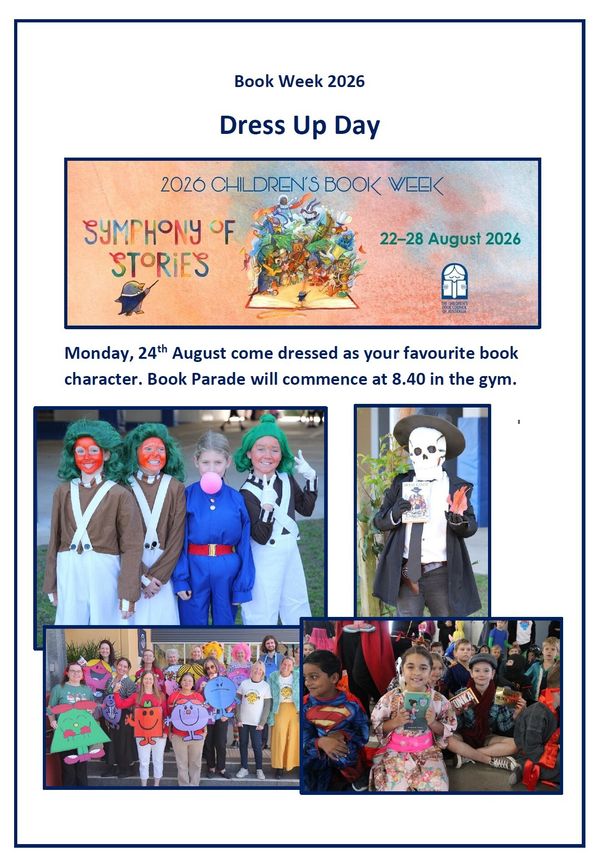
It's time to start thinking about your costume for our Book Week costume parade. All P-5 students are invited to come dressed as a book character to celebrate the start of Book Week. The parade will be held under J block at 8.40am.
Ms Nell Keen, Teacher Librarian
Uniform Shop
Winter Uniform Reminder
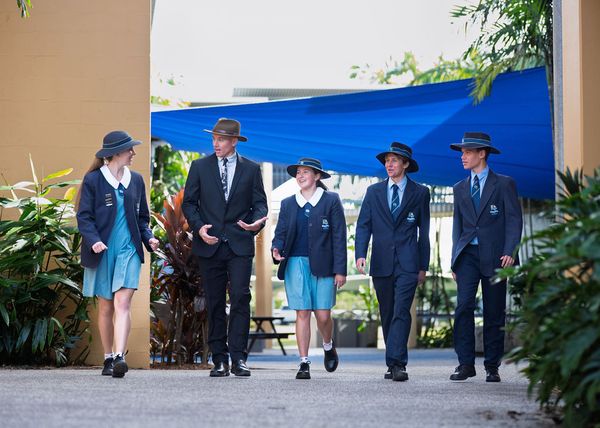
All students in Years 6–12 are required to wear the College winter uniform.
For students in Years 6–9, boys are expected to wear the College tie as part of their formal uniform. In Years 10–12, boys should be in full winter uniform, including the College tie, trousers and blazer. Girls in Years 10–12 are also required to wear the College blazer.
Both zipper and traditional ties are available for purchase via Flexischools or in-store, along with trousers and blazers. Trouser socks, suitable for both male and female students, are also available from the Uniform Shop for wear under trousers.
Whilst in formal uniform, the College formal jumper may be worn if required. Please note that the College sports jacket is only to be worn with the sports uniform.
We appreciate your support in ensuring students present themselves with pride and in accordance with College expectations during the winter season.
Please refer to the Uniform Guide for images and guidelines for wearing the Winter Uniform.
Uniform Shop bookings can now be made via the online – CLICK HERE
Uniform Shop Operational hours:
Monday – Thursday 8.00am-10.30am
Tuesday afternoon 2.00pm-4.00pm
Mrs Peta King, Uniform Shop
Friends of Pacific
Connecting College and Community
It’s difficult to believe we are already in Week 4 of Term 3! Time is just flying and the Friends of Pacific (FoP) exciting events are edging closer and closer.
Only 17 days now until the 25 Years of PLC Trivia Night on Friday 21st August.
This is the biggest social and fundraising night for the year on the school calendar. We are expecting a sell-out and a night full of fun, great entertainment and laughs.
There are still a limited number of tables available, so be sure to book yours soon. Don't have a full table of eight? No problem! Individual tickets are welcome, and we'll match you with other guests so you can enjoy a fantastic evening and put your trivia knowledge to test.
If you are stuck for a theme for your trivia table, this year is all about celebrating 25 years, so it's time to take a trip down memory lane! Think...Iconic bands, classic movies, TV shows we all binge-watched, big events from the last 25 years or fashion trends we would rather forget.
And just a reminder, if you don’t have a table booked at Trivia Night, but would still like to be part of the fun, why not be a volunteer on the night or buy some Raffle Tickets? We need several volunteers to help sell raffle tickets, greet people at the door, set up, pack up and other bits and pieces. We promise that we are a lot of fun, so please come and spend some time with us at our big event.
Raffle Tickets available here - we have over $10,000 in some amazing Raffle Prizes and a huge thanks to our many sponsors and donations we have received from local businesses.
Our FoP Car Park Raffle has been drawn, and the winner is Jenny B! Congratulations Jenny, your school morning drop offs just became a whole lot easier.
FoP Coffee and Chat sessions continue to be held on most Fridays at the school Coral Cafe at 8.00am. All welcome! Come along for a coffee and to share ideas about FoP events and activities. And most likely a laugh or too.
FoP Father’s Day stall is now 4 weeks away, on Tuesday 1st September. If you are able to help behind the scenes before the event, with unpacking, organising and pricing, or can help out on the day, please reach out. We would be very grateful.
Another reminder that in September, we have Gala Day on the 17th, where FoP will be holding a BBQ/canteen. If you are able to assist, please watch out for our Volunteer Call Out and share the request on your child’s year-level Facebook page.
FoP have had a wonderful year so far, with many new volunteers signing up and volunteering at events. Don’t forget, to be a volunteer at Pacific you need to complete the online volunteer training. And if you would like to volunteer at one of the FoP BBQs, there is a super quick BBQ training you will need to complete beforehand at school.
Our ongoing thanks and appreciation for all you to help FoP and to grow and foster our wonderful college community.
Ms Jan Watman and Mrs Jane Hill, Friends of Pacific Co-Chairpersons
Sports News
Pacific Runners Shine at Sunshine Coast Marathon
Pacific Lutheran College celebrated another successful year of its Run Club at the Sunshine Coast Marathon on Sunday 2 August.
Despite the drizzly weather, conditions were ideal for running, with 35 participants embracing the challenge with enthusiasm, determination and plenty of College spirit.
Runners of all ages encouraged one another, celebrated personal bests and enjoyed sharing the experience as a team.
Congratulations to everyone who took part, whether they achieved a new personal best, completed their chosen distance, or simply enjoyed being part of the event. Each participant represented the Pacific community with pride.
A special thank you to Mrs Kim Kiernan for preparing students to participate in the marathon events and for organising the shelter and refreshments for everyone involved on the day.
With another memorable event complete, Pacific’s runners are already looking forward to lacing up their shoes and doing it all again next year.
Mr Cameron West-McInnes, Head of Sport & Darren Hooper, Head of Junior Sport P-6
Club Sport
PLC Netball
There was plenty to celebrate across the courts this weekend as our PLC teams once again demonstrated resilience, teamwork and a willingness to challenge themselves.
Congratulations to our Mystics, Magic, Mavericks, Avengers, Rebels and Patriots on their well-earned victories. It was particularly exciting to see the Patriots record their biggest win of the season and the Magic secure a thrilling one-goal victory after a hard-fought contest.
One of the highlights of the round was seeing players continue to build confidence by stepping into new roles and embracing new challenges. These moments of growth are just as rewarding as the final score and reflect the positive learning environment our coaches continue to foster.
Across every age group, our players displayed excellent sportsmanship, encouraged one another and represented PLC with pride, whether celebrating a win or showing resilience in defeat.
We also extend our sincere thanks to our generous award sponsors, Banjo's Bakery Bokarina & Warana, Domino's Pizza and Boost Juice, whose ongoing support allows us to recognise the effort, teamwork and positive attitude of our players each week.
Finally, thank you to our coaches, managers, umpires, volunteers and families. Your commitment behind the scenes continues to make PLC Netball such a positive and rewarding experience for every player. We look forward to another fantastic round this weekend.
Another fantastic game from our U6 Tigersharks. A fierce, fun and fully functioning team effort from our players.
The teamwork just keeps getting better each week. A special shout-out to Boston for some awesome goal kicks that helped keep us on the front foot all game! A well-deserved 2–1 win to the Tigersharks. So proud of this team’s effort, sportsmanship and the way they’re growing together each week. Go Tigersharks!
U8 Piranhas - Manager Amy
The Piranhas had a terrific game today, coming away with a fantastic 5–3 win over the Caloundra Creators!
Our goal scorers were Benny (2), Billy (1), Killian (1) and Charlie (1). It wasn’t just our attack that impressed though. The team’s defence was outstanding, shutting down countless goal-scoring opportunities and making the Caloundra Creators work hard for every goal they earned.
Player of the Match went to Charlie for his terrific goal and excellent all-round performance in both attack and defence.
The Coach’s Award went to Mini for some excellent goalkeeping, thus keeping opposition’s score low.
The Piranhas haven’t had a win for a little while, so this was a special one. The whole team should be incredibly proud of the effort, teamwork and determination they showed from start to finish. Well done, Piranhas!
U12 Swordfish - Katie
What a game! Our team came out firing, taking a fantastic 3–0 lead into halftime after an outstanding first half. Zach was on target twice, while Noah scored a brilliant goal after a superb long pass from Ted that split the defence.
The second half tested everyone’s determination, with injuries interrupting the flow of the game. Despite that, the team showed incredible courage and resilience. Patton produced an outstanding save, putting their body on the line to keep us in the contest. There were countless close calls at both ends, and although we created chances, we just couldn’t find the back of the net again.
The opposition fought back to level the scores, with the match finishing 3–3. While it was disappointing not to hold onto the lead, every player showed fearless determination, never giving up until the final whistle. A fantastic team effort and a game full of heart, courage, and resilience.
Competitive Ladder – Top 4 after Round 18 go through to Semi-finals (2 rounds to go)
U11 Stingrays – 2nd on ladder
U11/12 Angelfish – 1st on ladder
U12 Swordfish – 4th on ladder
U12 Seahorses – 6th on ladder
U14/15 Sharks – 4th on ladder
COMING UP
8 August - Round 17 away games
15 August – Home Games - Round 18 + End of Season Presentations
Families of Pacific Lutheran College are invited to join the community of St Mark's Lutheran Church, 14 Bombala Terrace, Caloundra, this Sunday at 9.00am.
As part of our seasonal journey, Growing Space for Faith and Community, this Sunday's theme is "Stepping Out in Faith" (Matthew 14:22–33). Peter's first step onto the water reminds us that faith begins with trusting Jesus, even when the path ahead seems uncertain. As we follow Christ, our faith grows—and begins to bear fruit in the lives of others.
This Sunday we are pleased to welcome representatives from Australian Lutheran World Service (ALWS), sharing how God's love is reaching communities around the world through practical care, hope and generosity.
Children are welcome to participate in St Mark's Makers, where our Living Cross, now transformed into a flourishing Living Tree, will begin to bear Fruit of Faith. Children will create colourful fruit, each representing a way God's love can be shared—through kindness, hope, peace, generosity, forgiveness and care. Together we'll discover that even small acts of faith can become great blessings in God's hands.
Following worship, everyone is welcome to stay for morning tea and develop genuine friendships.
Whether you're part of our regular community, connected through Pacific Lutheran College, or simply looking for a welcoming place to worship, we'd love to welcome you.
Sunday Worship: 9.00am St Mark's Lutheran Church 14 Bombala Terrace, Caloundra
Sharing a common mission and ministry with Pacific Lutheran College
“Growing in faith and sharing God’s love with others”
Weekly worship services are held at 14 Bombala Terrace Caloundra at 9.00am. We are thankful that we can meet together each week for worship.
Our worship services are intergenerational with a blend of traditional and contemporary.
You’re welcome to follow us on Facebook and visit our Church webpage.